Is That Really Mom Calling? The Safe Word Trick
A cloned voice can sound just like a loved one in trouble. The FBI's advice against it is simple: agree on a family safe word.

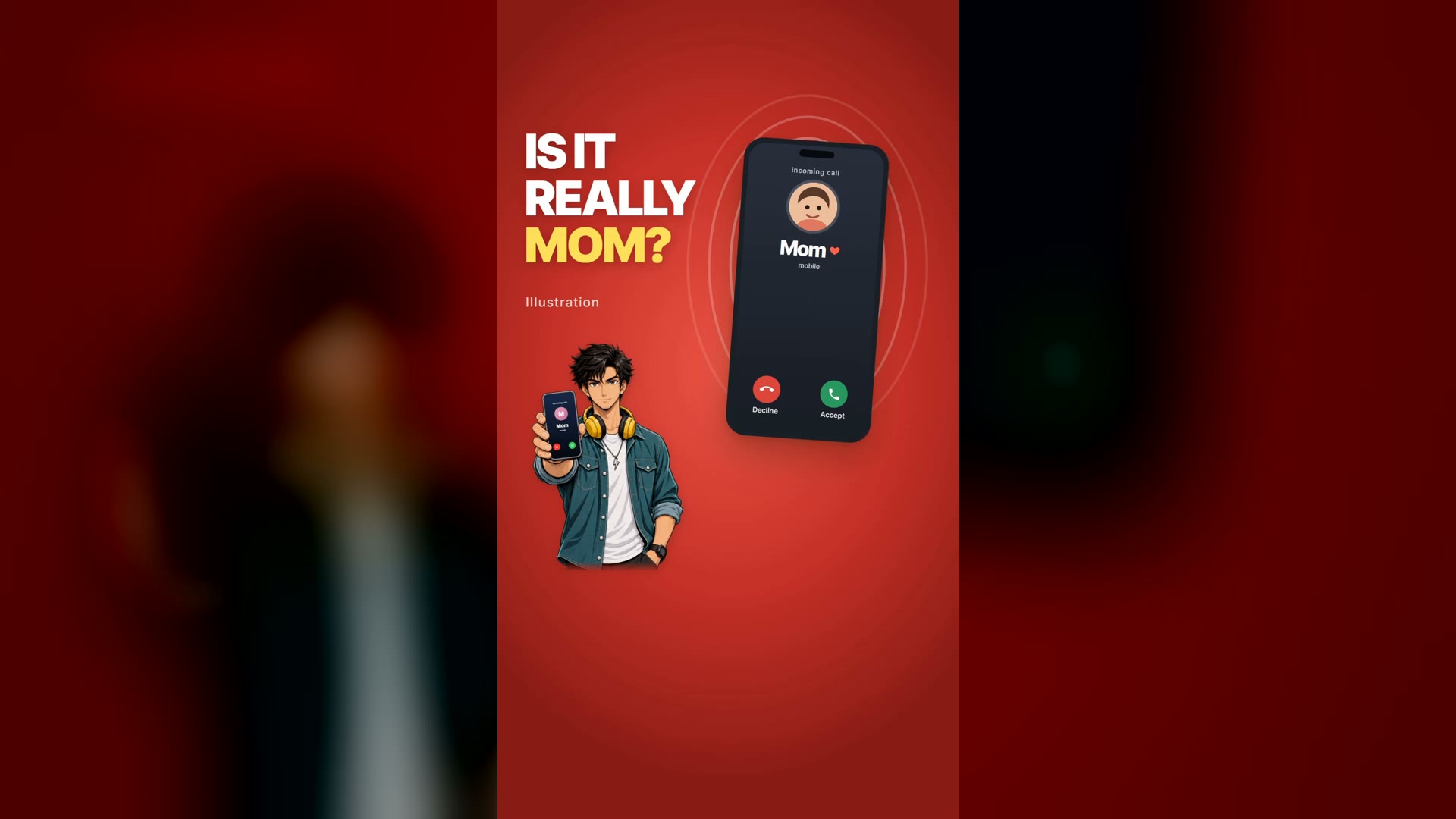
A call comes in. It sounds like your mother, crying and begging for money. US consumer and law enforcement agencies warn that it might not be her.
What happened
On 20 Mar 2023, the US Federal Trade Commission issued a consumer alert titled "Scammers use AI to enhance their family emergency schemes." It described scammers using a short audio clip of a family member's voice, taken from content posted online, to make a cloned voice call.[5]
The FBI's Internet Crime Complaint Center (IC3) followed with a public service announcement on generative AI fraud on 3 Dec 2024. It advised families to create a secret word or phrase and to limit how much of their voice they share online. A second IC3 announcement in May 2025, on AI voice messages, repeated the advice to use a family secret word.[3][2]
The FBI IC3 2025 Internet Crime Report, released in April 2026, covers voice-clone scams that play on distress among the complaints it received in 2025.[1]
Why it's surprising
Our readMost people treat a familiar voice as proof of who is calling. The FTC and FBI warnings suggest that this is no longer safe, because a short clip posted online can be enough to copy the voice of someone you love.[5][3]
How the scam and the defence work
According to the FTC, the scammer copies a voice and then fakes an emergency, such as a crash, an arrest or a sudden need for cash. The caller pushes the victim to pay fast, by wire transfer, cryptocurrency or gift cards.[5][3][1]
The FBI's answer is a family secret word or phrase. If a call asks for money, ask for the word.[3][2]
Starling Bank backed the same idea in its Safe Phrases campaign, launched on 18 Sep 2024. The bank advises agreeing on the phrase in person and never sharing it digitally. That means no text messages and no group chats.[4]
If the caller cannot give the word, the FTC advises hanging up and calling the person back on a number you already know.[5][3]
Our readThe logic is simple. A cloned voice copies how someone sounds, but not what only the family knows. Your real relative knows the word, and a copy of their voice does not.[3][2]
Why it matters
Some of the guidance is a few years old. It is still the official advice, and no newer guidance has replaced it.
Our readThe defence costs nothing and needs no app. It also does not depend on spotting a fake voice by ear. Three separate organisations reached the same advice: a US regulator, the FBI and a UK bank. That makes the advice more convincing.[3][2][4][5]
What's confirmed and what isn't
Confirmed: the FTC has warned about family emergency scams that use cloned voices, and the FBI recommends a family secret word or phrase and calling back on a known number.[5][3][2]
The advice to share the phrase only face to face comes from a bank's campaign, not from the government.[4]
These sources do not show how often these calls happen or how many seconds of audio a clone needs. They also do not show that any phone app or carrier blocks the calls. A call that sounds like a relative in trouble might be a clone. It is not necessarily one.
- Not claimedHow often voice-clone scam calls happen.
- Not claimedHow many seconds of audio a voice clone needs.
- Not claimedThat any app or phone carrier stops these calls.
- Not claimedAny specific case, including the Florida or Arup cases.
- Not claimedThat a distressed call from a relative is a clone; only that it might be.
Sources
- FBI Internet Crime Complaint Center (IC3) — 2025 Internet Crime ReportPrimary
- FBI Internet Crime Complaint Center (IC3) — Public service announcement on AI voice messages and family secret wordsPrimary
- FBI Internet Crime Complaint Center (IC3) — Public service announcement I-120324-PSA on generative AI fraudPrimary
- Starling Bank — Starling Bank launches Safe Phrases campaignIndependent
- Federal Trade Commission — Scammers use AI to enhance their family emergency schemesIndependent
7 claims checked against these sources; 6 confirmed.
Spot an error? Request a correction.
Video transcript
Your mom calls, crying, begging for money. It might not be her.
Scammers can copy a voice from a short clip online.
Then they fake an emergency: a crash, an arrest, a rush for cash.
The fix: a family safe word. The FBI recommends it.
Share it face to face, never by text.
If a call asks for money, ask for the word.
No word? Hang up and call back on the number you have saved.
Your real family knows the word. A clone doesn't.
The full 5-minute plan is linked right below.
Production note: The visuals are original illustrations: a generic phone screen with made-up names and a made-up example safe word, plus an animated vector presenter. The narration uses a preset synthetic voice (Microsoft Edge TTS), and no real voice was cloned.
What else changed
 AI & RoboticsLong video · 5:06AI & RoboticsAI Voice Scams: Protect Your Family in 5 MinutesScammers can copy a loved one's voice from a short online clip. US and UK agencies point to simple, free habits that stop the call from working.Read story
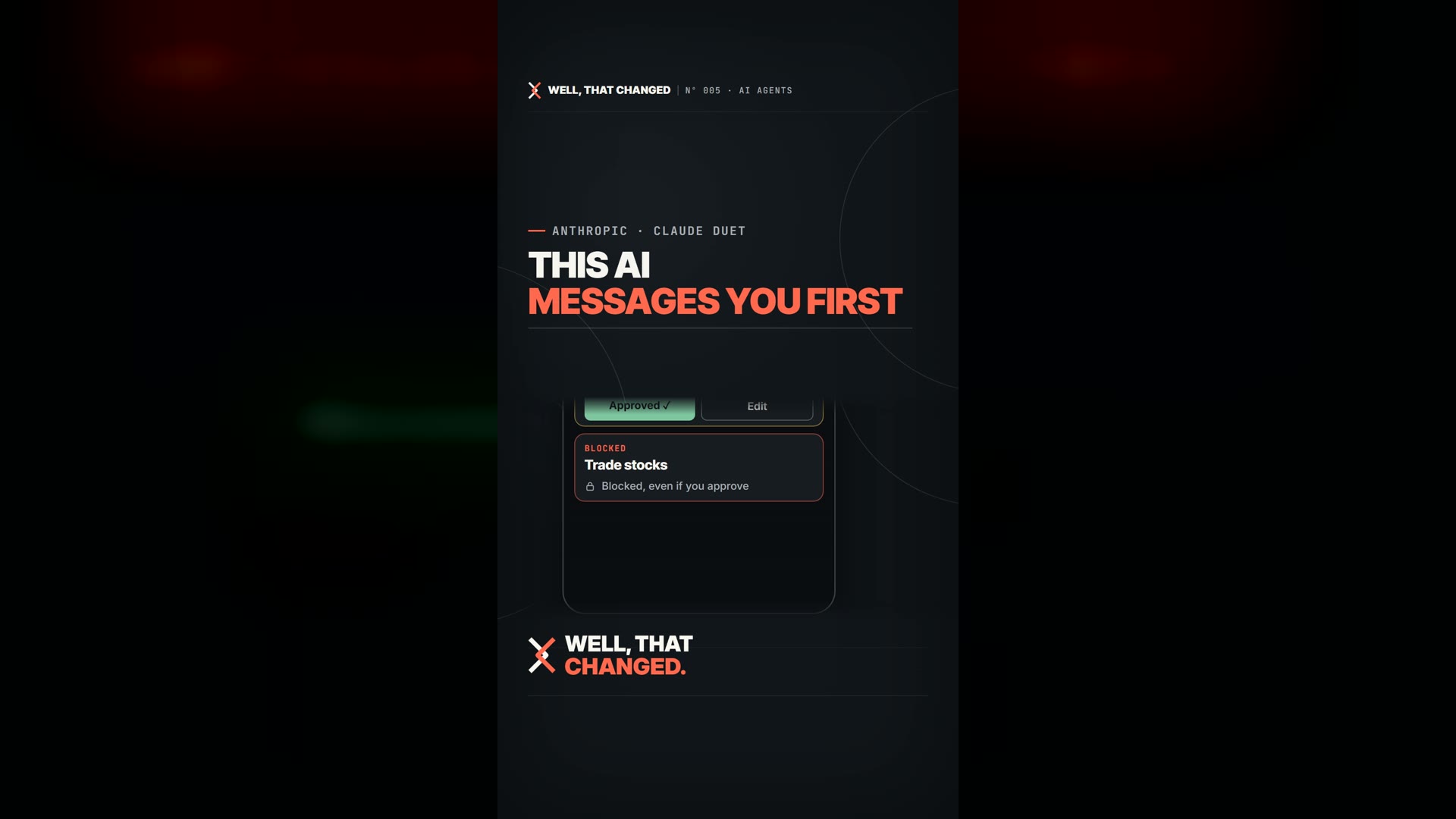 AI & Robotics2 min readAI & RoboticsThis AI Assistant Messages You FirstAnthropic's Claude Duet is designed to contact you first, then stop and ask before it sends, pays, signs or deletes anything. Here is what the company says it does, and what nobody has tested yet.Read story
 AI & Robotics3 min readAI & RoboticsNVIDIA's Humanoid Is a Plan. The Robots on Stage Were Ducks.At GTC Berlin, NVIDIA announced a humanoid due in early 2027. The robots that actually performed on stage were four small ducks. Here's what is available now, and what is still a plan.Read story