Rubin Spots Its First Possible Dwarf Planet
Rubin Observatory has found a faint moving dot that could be a sixth recognized dwarf planet. Older images from 2016, taken by another telescope's camera, helped pin down its orbit.

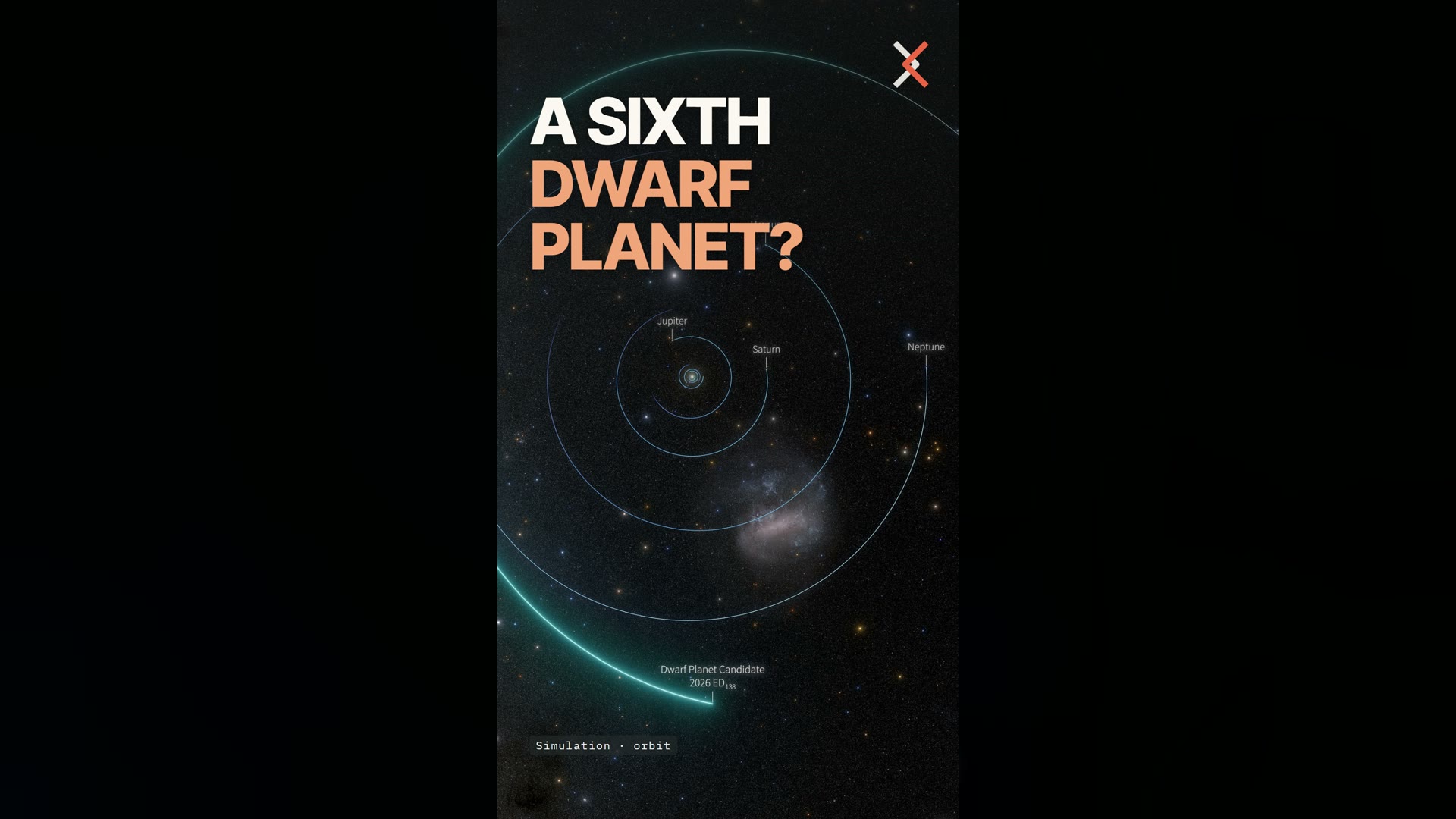
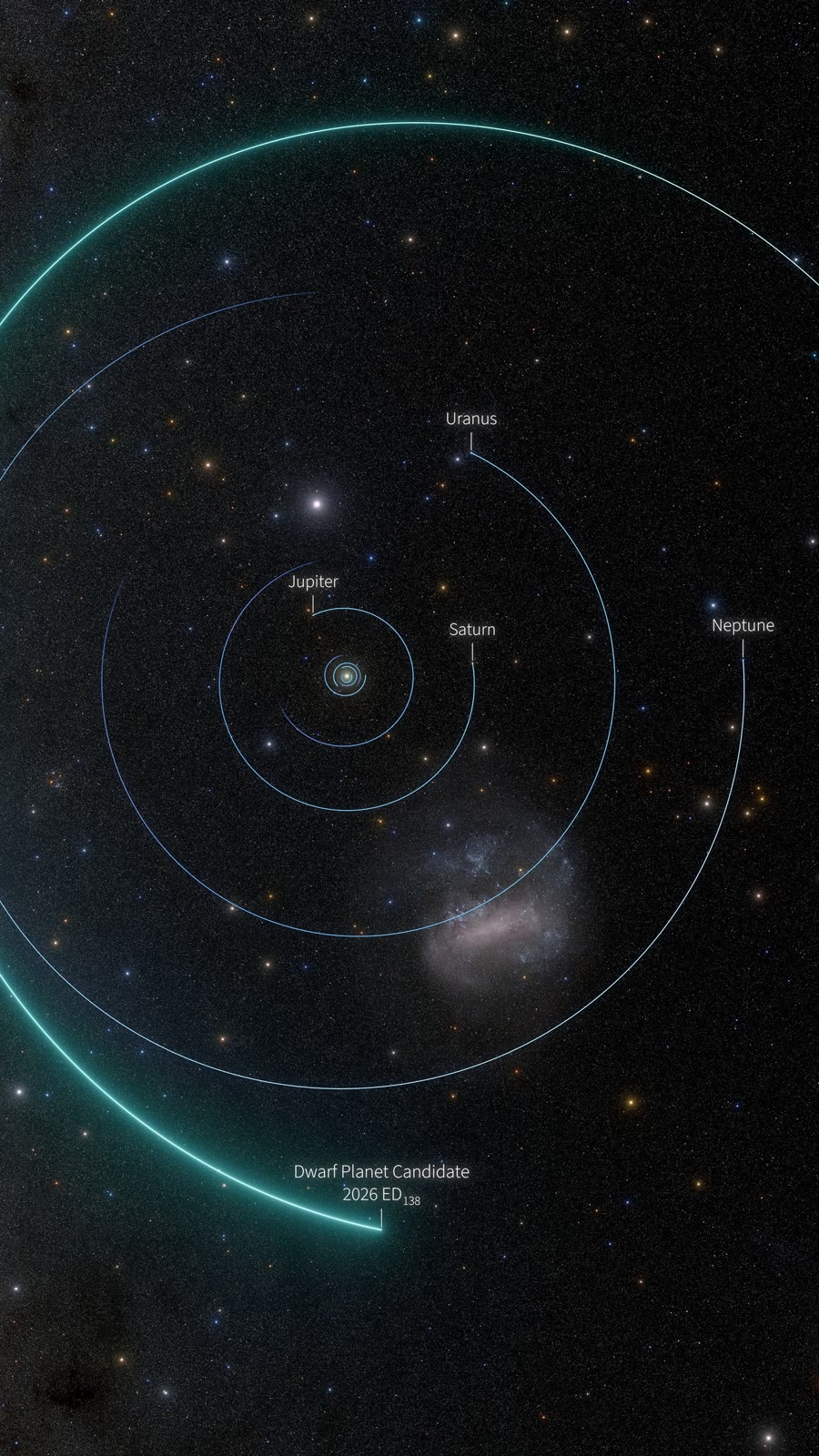
A new telescope in Chile has spotted a possible dwarf planet, a faint dot that was almost lost among millions of stars. Rubin Observatory calls 2026 ED138 its first dwarf planet candidate.
What happened
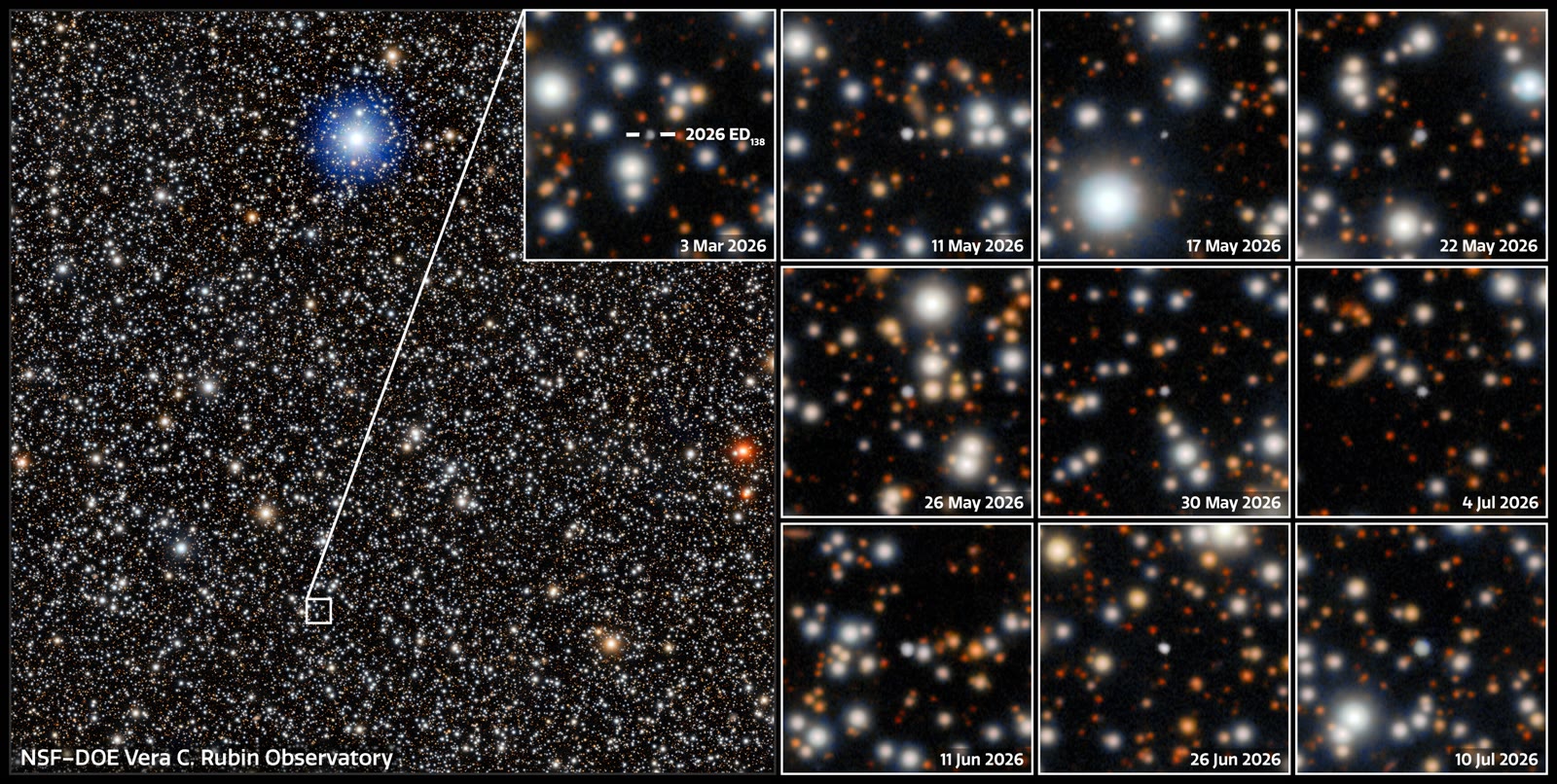
On 27 October 2026, Rubin Observatory announced 2026 ED138 as its first dwarf planet candidate. The object showed up as a faint dot moving against the crowded stars of the Milky Way, lost among the many background sources.[1][4]
The detections came from Rubin data collected earlier in 2026. On the evening of 13 October, the astronomer Holman, of the CfA, ran a search on that data using code written by K. Napier. The search linked the separate detections into one path across the sky.[1]
The Minor Planet Center published the object's details the same day in circular MPEC 2026-U85.[2]
It was already in older pictures
The same object had already been recorded years earlier. According to the Minor Planet Center, its earliest known detection dates to 25 February 2016. Those images came from the DECam camera on the Blanco telescope at Cerro Tololo (observatory code W84), not from Rubin.[2][4]
Our readIn other words, the evidence was sitting in existing images. Nobody had connected those older sightings to a single object until Rubin's detections gave astronomers a path to match them against.[1][2]
How the orbit and size were worked out
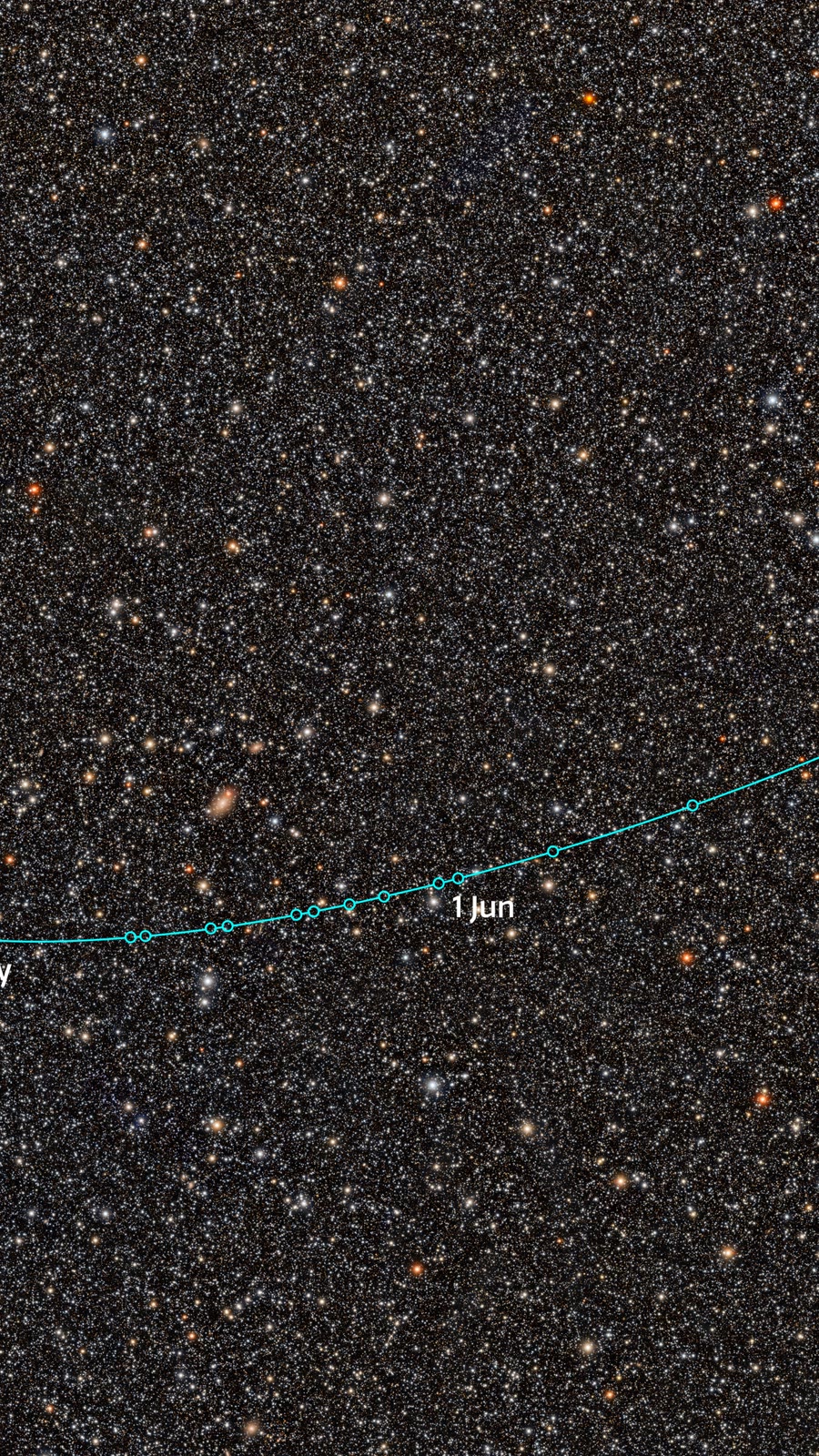
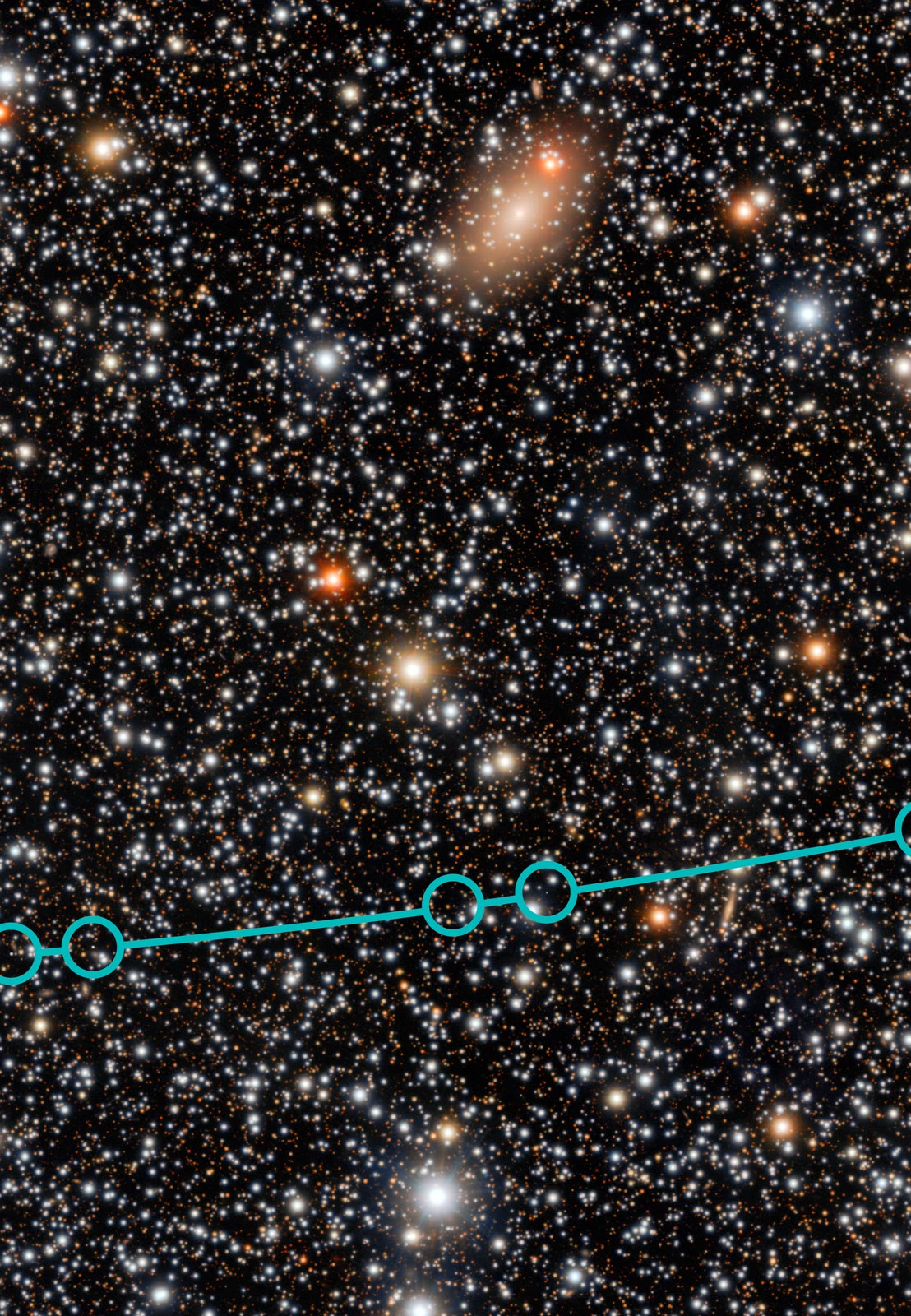
The older detections trace more than 10 years of the object's orbit. That long record is what lets astronomers pin the orbit down. One trip around the Sun takes about 281 years.[1][2][4]
Right now it is about 46 times Earth's distance from the Sun, out past Pluto. It does not stay that far out. At its closest, it comes within 36.86 au of the Sun, closer than Pluto's average distance.[2]
Its size is estimated at 600 to 1,500 kilometres across. The estimate comes from how bright it looks and an assumed reflectivity, so the true size is not yet measured.[1][4]
Why it matters
NASA lists five recognized dwarf planets: Ceres, Pluto, Haumea, Makemake and Eris. If 2026 ED138 is confirmed, it would be the sixth.[3]
Our readThe find also shows a working method: new survey data, a search program to link faint moving dots, and older archives to extend the record back in time.[1][2]
What's confirmed and what isn't
Confirmed: Rubin found the object in its 2026 data, the 13 October search linked the detections, and older DECam detections reach back to 2016. The orbit period of about 281 years and its current distance come from the Minor Planet Center.[1][2]
Not yet known: its exact size, and whether it truly is a dwarf planet. Rubin says observations in the infrared are needed to constrain its size and confirm its nature.[1]
Nobody has seen what the object looks like. It remains a candidate, and the size range is an estimate rather than a measurement.
- Not claimedThat 2026 ED138 is a confirmed dwarf planet.
- Not claimedThat it always orbits beyond Pluto.
- Not claimedWhat the object looks like.
- Not claimedThat the 2016 images were taken by Rubin.
- Not claimedThat its size has been measured rather than estimated.
Sources
- Rubin Observatory — Rubin Observatory news release: first dwarf planet candidate, 2026-10-27Primary
- Minor Planet Center — Minor Planet Electronic Circular MPEC 2026-U85, 2026-10-27Primary
- NASA — Dwarf PlanetsIndependent
- Universe Today — The Rubin Observatory finds its first dwarf planet candidateIndependent
7 claims checked against these sources; 6 confirmed.
Spot an error? Request a correction.
Production note: Visuals are unaltered CC BY 4.0 discovery images and labelled orbit simulations from NSF–DOE Vera C. Rubin Observatory/NOIRLab/SLAC/AURA, resized and reframed. No artist's impression or generated imagery was used, and the narration voice is a synthetic preset voice.
What else changed
 Space & Science2 min readSpace & ScienceA Dark-Universe Telescope Just Found a New CometEuclid was built to map the dark universe, not to hunt comets. In September 2026 its images caught a previously unknown one, now named C/2026 S1 (Euclid).Read story
 Space & Science2 min readSpace & ScienceHow Do You Rehearse a Landing on Titan?NASA's Dragonfly rotorcraft found a safe landing site on Titan and came down. It all happened in a real-time simulation on Earth.Read story
 Space & Science2 min readSpace & ScienceOne Particle of Antimatter, Held for MonthsPhysicists at Northwestern University have held a single positron, the electron's antimatter twin, in a magnetic trap for months. They can now watch it climb one energy step at a time.Read story