The Ocean's Loner Microbe Can Also Stick Together
Prochlorococcus, the ocean's most abundant photosynthetic cell, was seen as a free-floating loner. MIT researchers found it can also live in sticky biofilms.

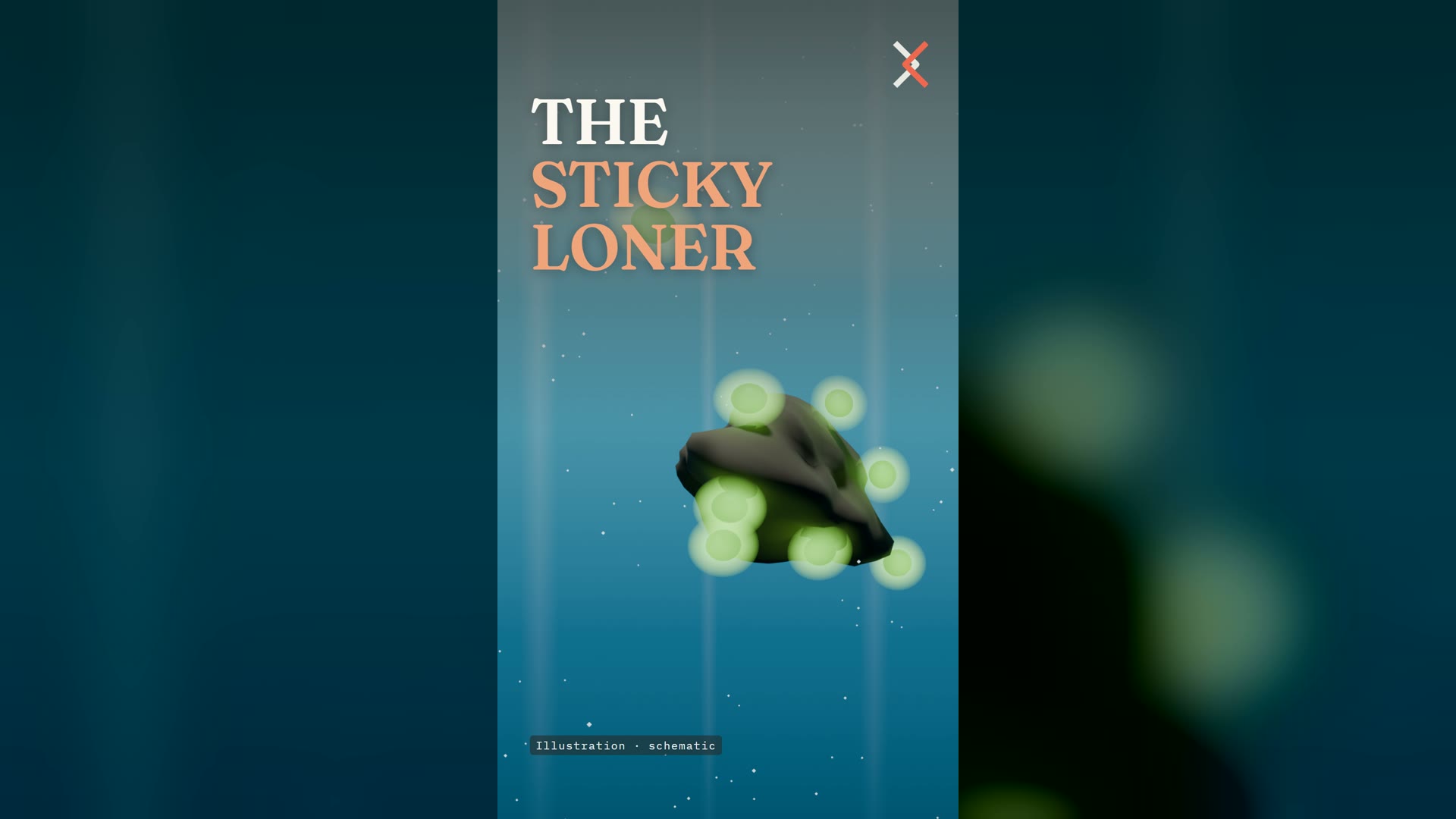
Prochlorococcus is the smallest and most abundant photosynthetic organism in the ocean, and it has mainly been considered a free-living drifter. A team at MIT has now shown that it can also live attached to surfaces, in biofilms.
What happened
The team reported its results in Nature Communications, published on 15 September 2026. MIT News described the work on 20 October 2026.[1][2]
In the lab, all seven strains tested formed biofilms. These were 4 low-light and 3 high-light strains, covering every clade. In typical glass-tube cultures, about 6 percent of cells were attached to the walls.[1][2]
The researchers then transferred only the attached cells, again and again. Over an average of 26 generations, the attached share rose from about 6 percent to about 85 percent.[1][2]
In the ocean, size-filtered seawater DNA from Station ALOHA and Tara Oceans contained particle-bound Prochlorococcus from the surface down to 1000 m. At Station ALOHA near Hawaii, 11.7 percent, plus or minus 4.7, of Prochlorococcus in the 5 to 150 m sunlit layer were found on particles.[1]
Why it's surprising
Prochlorococcus is smaller than a micron, yet it accounts for roughly 10 percent of annual marine carbon fixation, about 4 petagrams of carbon a year. It has been treated as free-living and neutrally buoyant in sunlit water.[1]
Genome comparison found no mutation behind the sticky behaviour. The trait is non-genetic but heritable. Populations could also be switched back to mainly free-floating, over about 60 generations.[1][2]
Our readIn other words, genetically identical cells appear able to live two ways, and to move between them.[1][2]
How the team tested it
The work combined lab cultures in glass tubes and on chitin particles, genome and gene-expression comparisons, and measurements of growth, oxygen and dissolved carbon. Field data came from metagenomics of size-filtered seawater.[1]
In the lab, biofilm cells had more chlorophyll per cell and grew about 25 to 28 percent more slowly. They exuded 3.9 femtograms of organic carbon per cell per day, against 2.2 for free-floating cells: nearly twice as much.[1][2]
Cells kept emerging from lab biofilms, including on chitin particles, and started new free-floating populations.[1][2]
Why it matters for ocean carbon
Prochlorococcus was thought to contribute little to carbon sinking, because it lives and dies near the surface.[1]
The authors estimate that if about 10 percent of Prochlorococcus is attached and sinking, about 0.5 petagrams of carbon, or half a billion tonnes, could leave the sunlit zone each year. They call this a very rough, first-order estimate. It has not been measured.[1][2]
Our readIf attached cells do sink, carbon budgets may need to include them. A familiar organism with a second way of living could change how scientists count its role.[1]
What's confirmed and what isn't
Confirmed in the lab: all seven strains formed biofilms, selection raised the attached share from about 6 to about 85 percent, and no mutation explained it. Lab switching rates come from glass tubes, and the authors say ocean rates will differ.[1][2]
In the field, particle-bound is defined by filter size: cells caught on filters of 1.2 micrometres or more. That is not a direct sighting of biofilms. The Station ALOHA share comes from one research cruise, HOT346.[1]
The carbon export figure is an estimate, not a measurement. The lab and field numbers come from the paper; MIT News restates them. No independent expert comment was found.[1][2]
- Not claimedThe study does not measure how much carbon actually reaches the deep sea; the half-a-billion-tonne figure is a rough what-if calculation.
- Not claimedIt does not claim the microbe removes carbon from the atmosphere permanently or is a climate solution.
- Not claimedLab switching rates are not ocean switching rates.
- Not claimedParticle-bound cells in the field are defined by filter size, not seen directly as biofilms, and the Station ALOHA share comes from one research cruise.
- Not claimedIt does not claim particle-attached cells were found in every sample.
- Not claimedIt does not claim carbon is locked away.
- Not claimedThe sticky trait did not come from a new mutation.
- Not claimedIt does not claim twelve percent of all ocean microbes are this one species.
- Not claimedNo independent expert comment was found; coverage restates the MIT release.
Sources
- Nature Communications — Biofilm formation and dynamics in the marine cyanobacterium Prochlorococcus, 2026-09-15Primary
- MIT News — The ocean's most abundant loner microbe has a sticky second life, 2026-10-20Primary
- Wikimedia Commons — Prochlorococcus marinus TEM image (Chisholm Lab, CC0)Independent

11 claims checked against these sources; 10 confirmed.
Spot an error? Request a correction.
Video transcript
The ocean's most abundant photosynthetic cell was thought to be a loner. It can also stick together.
Prochlorococcus is smaller than a micron, yet captures about a tenth of the carbon fixed in the sea.
At MIT, seven strains grew in glass tubes. About 6% of cells stuck to the walls.
Transfer only the sticky ones, and the share climbed to about 85%.
No mutation explained it. Genetically identical cells can switch lifestyles, and back again.
Attached cells grew more slowly, but released nearly twice as much organic carbon.
In seawater DNA near Hawaii, roughly 12% of these cells in sunlit water were on particles.
If attached cells sink, a very rough estimate is half a billion tonnes of carbon a year leaving the sunlit layer. That hasn't been measured.
The loner, it turns out, also lives in crowds.
Production note: Visuals are original schematic animation, not to scale, plus an unaltered CC0 false-colour electron micrograph of lab cells from 2017 by Luke Thompson (Chisholm Lab) and Nikki Watson (Whitehead Institute); it is not from this study and does not show a biofilm. Narration used a synthetic preset voice, and no figures from the paper were used.
What else changed
 Earth & Nature2 min readEarth & NatureThis Plastic Almost Vanished on the Deep SeabedCompostable plastic usually lingers in the cold deep sea. Seabed tests off Japan found films with an enzyme mixed in lost almost all their mass in five months, 757 metres down.Read story
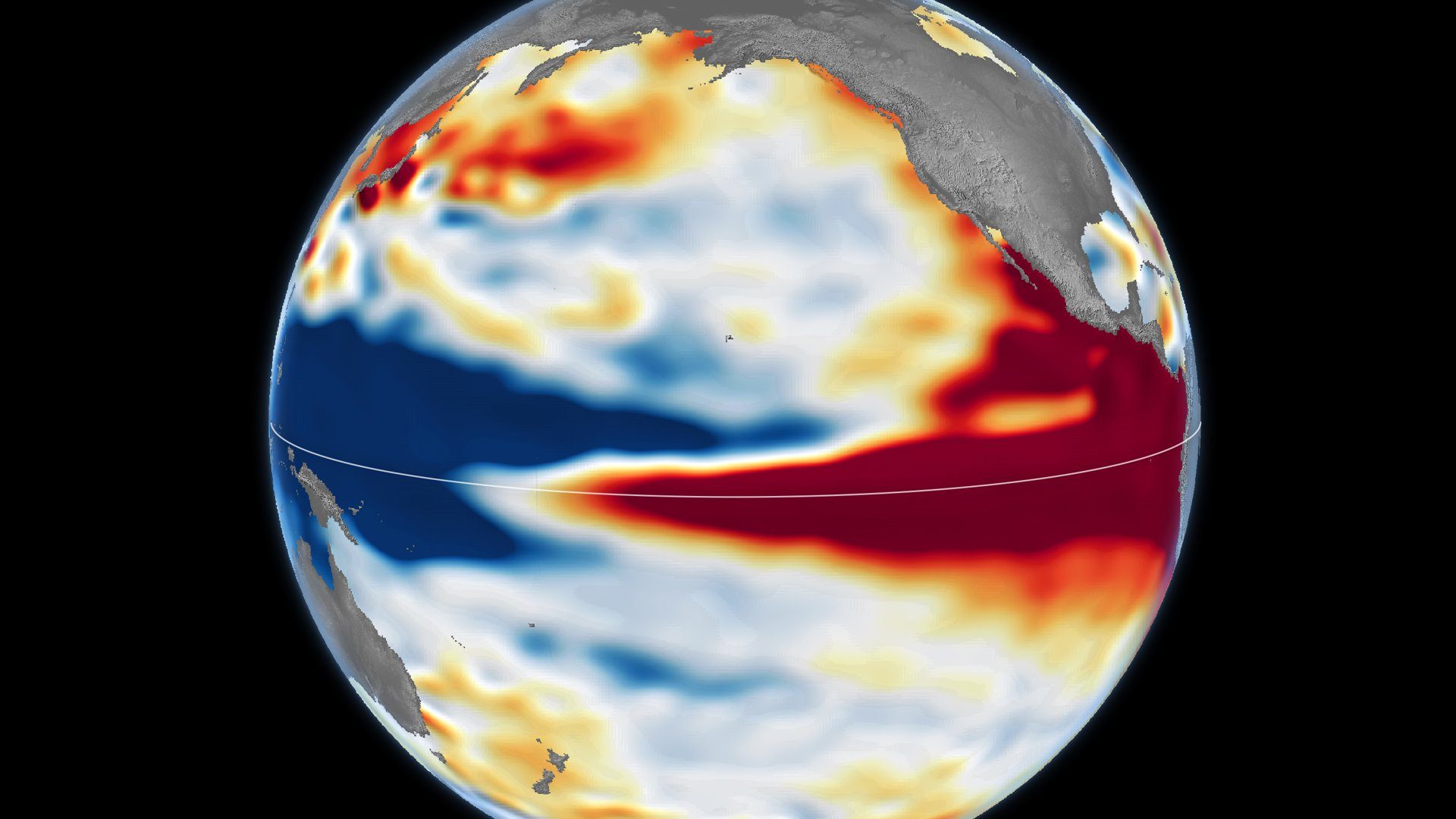 Earth & Nature2 min readEarth & NatureHow Ocean Height Reveals Hidden HeatWarm water takes up more room. That is why NASA can track El Niño's heat from space by measuring how high the sea stands, and why this October looks a lot like 1997.Read story
 Space & Science2 min readSpace & ScienceHow Do You Rehearse a Landing on Titan?NASA's Dragonfly rotorcraft found a safe landing site on Titan and came down. It all happened in a real-time simulation on Earth.Read story