This Plastic Almost Vanished on the Deep Seabed
Compostable plastic usually lingers in the cold deep sea. Seabed tests off Japan found films with an enzyme mixed in lost almost all their mass in five months, 757 metres down.

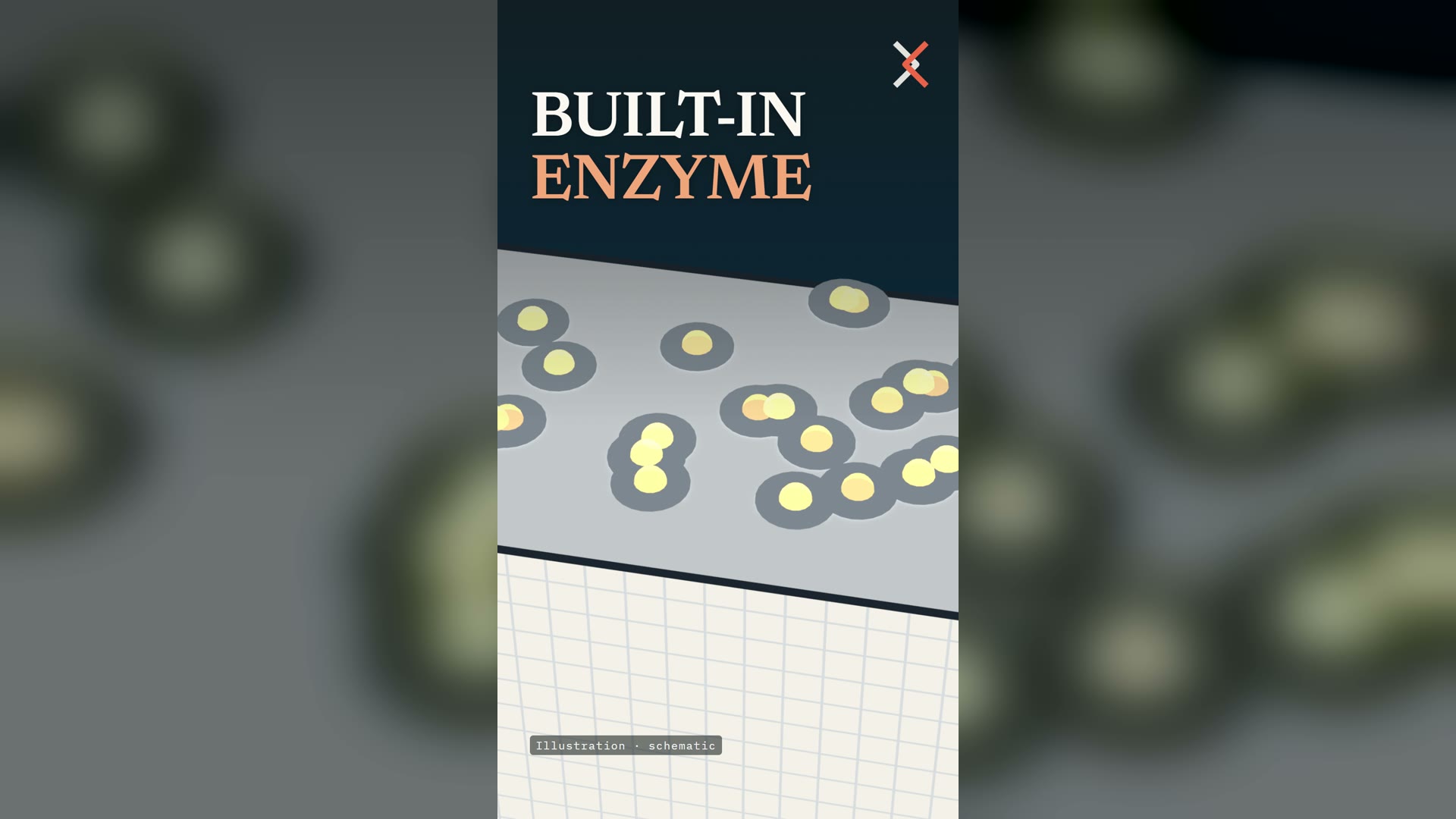
Two plastic films spent five months on the seabed, 757 metres down. One barely changed. The other, carrying its own enzyme, came back almost gone.
What happened
Researchers from the University of Tokyo, JAMSTEC and Gunma University reported the results in Nature on 21 Oct 2026. They made test films from four compostable polyesters: PBS, PBSA, PCL and PBAT. Some films had 3 wt% of a plastic-cutting enzyme, cutinase, mixed in. Others had none.[1]
The films sat in mesh chambers on the seabed off Japan, placed by Shinkai 6500 or an ROV. After 5 months at 757 m, the PBS films with the enzyme had lost 97.3% of their mass. The PBSA and PCL films had lost 100%. Plain films of the same plastics lost 1.2–3.4%.[1][2]
Why it's surprising
Compostable plastics are made to break down in industrial compost. In the cold deep sea they break down very little. An earlier deep-sea study found that plain films lost only 0.4–12.9% of their mass after 18 months.[1][3]
Our readAgainst that baseline, films that almost disappeared in five months are a sharp contrast, even though they stayed on the same cold seabed.[1][3]
How it works
The enzyme was mixed into the molten plastic by melt extrusion, at 90–130 °C for under 5 minutes. In seawater, it cuts the long plastic chains into small, soluble pieces.[1]
Microbes can then use those pieces. In an oxygen-demand test in coastal seawater, the enzyme films reached 50.9% in 30 days, against 4.7% for plain films. This microbial use was measured in coastal seawater, not on the seabed.[1]
Why it matters
The authors say they are exploring fishing lines, nets and other formats made this way. That is a plan. It has not been tested yet.[1]
None of this makes it acceptable to dump plastic at sea.
Our readCompostable plastic that reaches the deep sea can linger there. A breakdown switch built into the material itself could help some of it disappear where compost conditions do not exist.[1][3]
What's confirmed and what isn't
Not every plastic responded the same way. With the enzyme, PBAT lost 12.1% at 757 m, against 1.1% without it.[1]
Deeper down, progress was slower. At 5,503 m, a different enzyme, lipase, was tested for 18 months. PBSA lost 30.5% and PCL 7.7%. Because the enzyme and the duration differ, these results cannot be compared directly with the 757 m tests.[1]
These were test films in mesh chambers, not products on sale. Only four compostable plastics were tested, not ordinary plastics like PET or polyethylene. Adding 3 wt% enzyme lowered the films' strength and stretch, and cost is still an open challenge.[1]
Mixing enzymes into plastic is not new. It was shown in the lab in 2024, using PLA. The new step is testing on natural seabeds.[4]
All the seabed results come from a single peer-reviewed, open-access paper. The earlier deep-sea study supplies the baseline.
- Not claimedThat the method works for all plastics. Only PBS, PBSA, PCL and PBAT were tested, not PET or polyethylene.
- Not claimedThat this is a product on sale. These were test films in mesh chambers.
- Not claimedThat this is the first enzyme-embedded plastic. Embedding was shown in the lab in 2024.
- Not claimedThat dumping plastic at sea is fine.
- Not claimedThat fishing lines or nets made this way have been tested. They are only a plan.
- Not claimedThat microbial use of the breakdown products was measured on the seabed. It was measured in coastal seawater.
- Not claimedThat the method comes without trade-offs. 3 wt% enzyme lowered strength and stretch, and cost is an open challenge.
Sources
- Nature — Enzyme-embedded polyesters for accelerated biodegradation in the deep sea (Huang et al.), 2026-10-21Primary
- Nature — Nature Research BriefingBackground
- Nature Communications — Omura et al., deep-sea baseline (2024)Independent
- Nature — Earlier lab embedding (PLA), Nature (2024)Independent
10 claims checked against these sources; 9 confirmed.
Spot an error? Request a correction.
Video transcript
Two plastic films spent five months on the seabed, 757 meters down. One barely changed. The other almost vanished.
Both were compostable plastics, made to break down in industrial compost. In the cold deep sea, they usually don't.
So researchers in Japan mixed a plastic-cutting enzyme into one of them while it was molten.
In seawater, the enzyme cuts the long plastic chains into small pieces that microbes can use.
Three of the four plastics tested lost almost all their mass. Without the enzyme, they hardly changed.
But the fourth lost only about 12%, progress was slower five and a half kilometers down, and these were test films, not products.
Two films went down. The one carrying its own enzyme came back almost gone. Next, the team is looking at fishing nets.
Production note: Original schematic animation (not to scale), unaltered test photos from Huang et al. 2026, Figure 3c,d (CC BY 4.0, cropped only), and a chart redrawn from the paper's data. The narration uses a synthetic preset voice.
What else changed
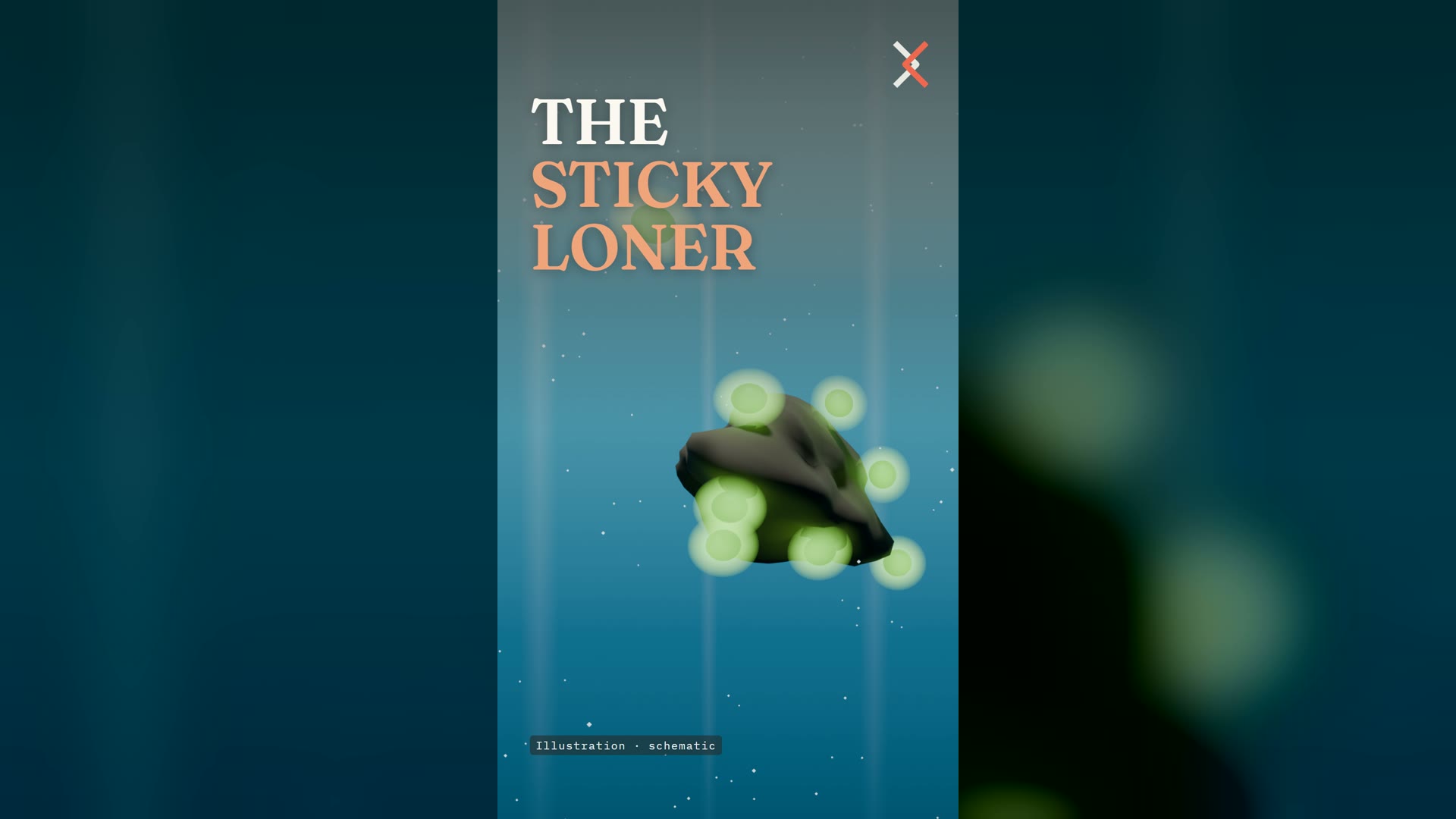 Earth & Nature2 min readEarth & NatureThe Ocean's Loner Microbe Can Also Stick TogetherProchlorococcus, the ocean's most abundant photosynthetic cell, was seen as a free-floating loner. MIT researchers found it can also live in sticky biofilms.Read story
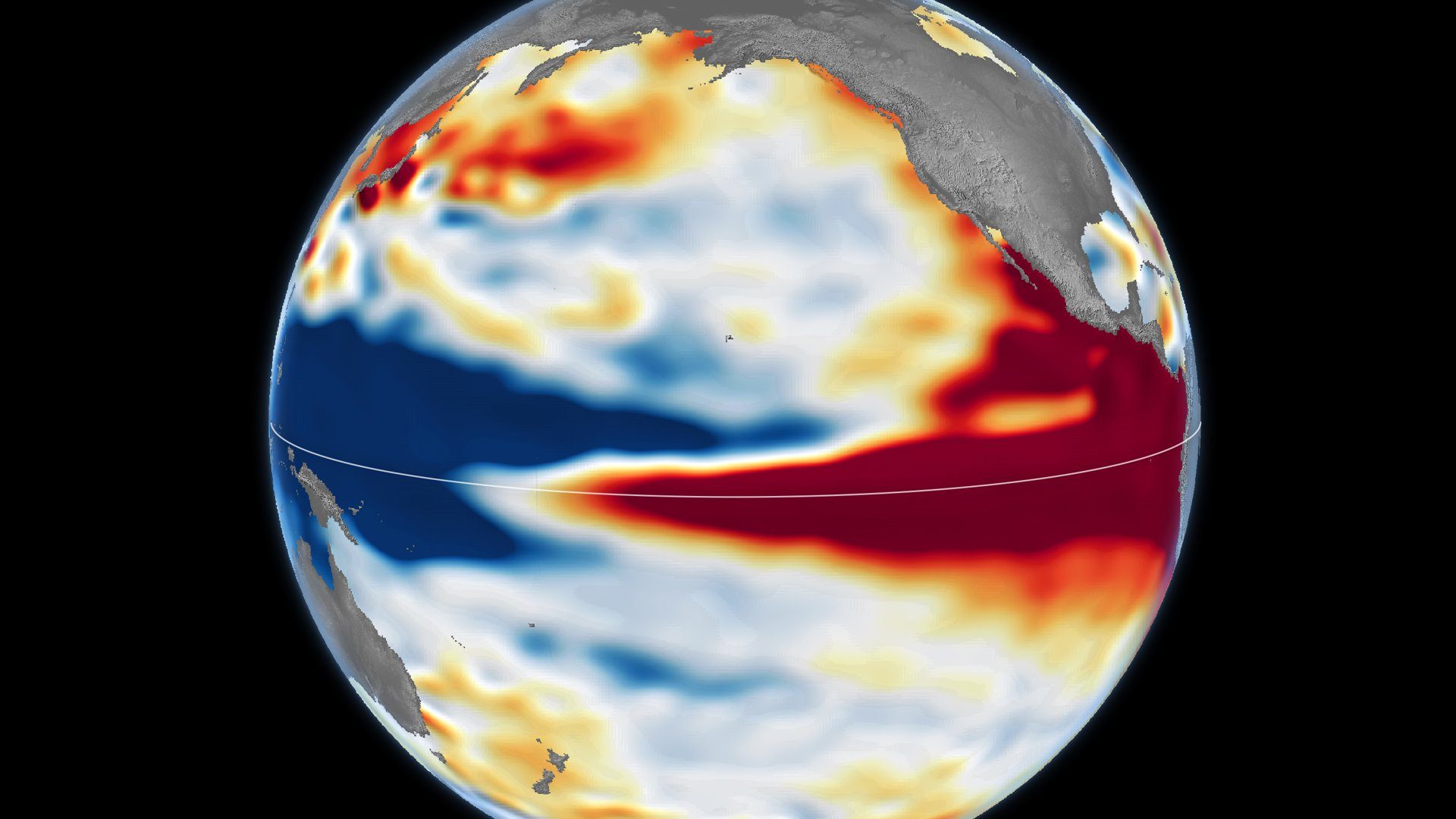 Earth & Nature2 min readEarth & NatureHow Ocean Height Reveals Hidden HeatWarm water takes up more room. That is why NASA can track El Niño's heat from space by measuring how high the sea stands, and why this October looks a lot like 1997.Read story
 Space & Science2 min readSpace & ScienceHow Do You Rehearse a Landing on Titan?NASA's Dragonfly rotorcraft found a safe landing site on Titan and came down. It all happened in a real-time simulation on Earth.Read story