Hubble and Webb Spot a Ghostly Cat in Space
New Hubble and Webb images show the Cat's Head Nebula, a pillar of gas and dust in the Carina Nebula that looks like a cat seen from behind, with a glowing red eye.

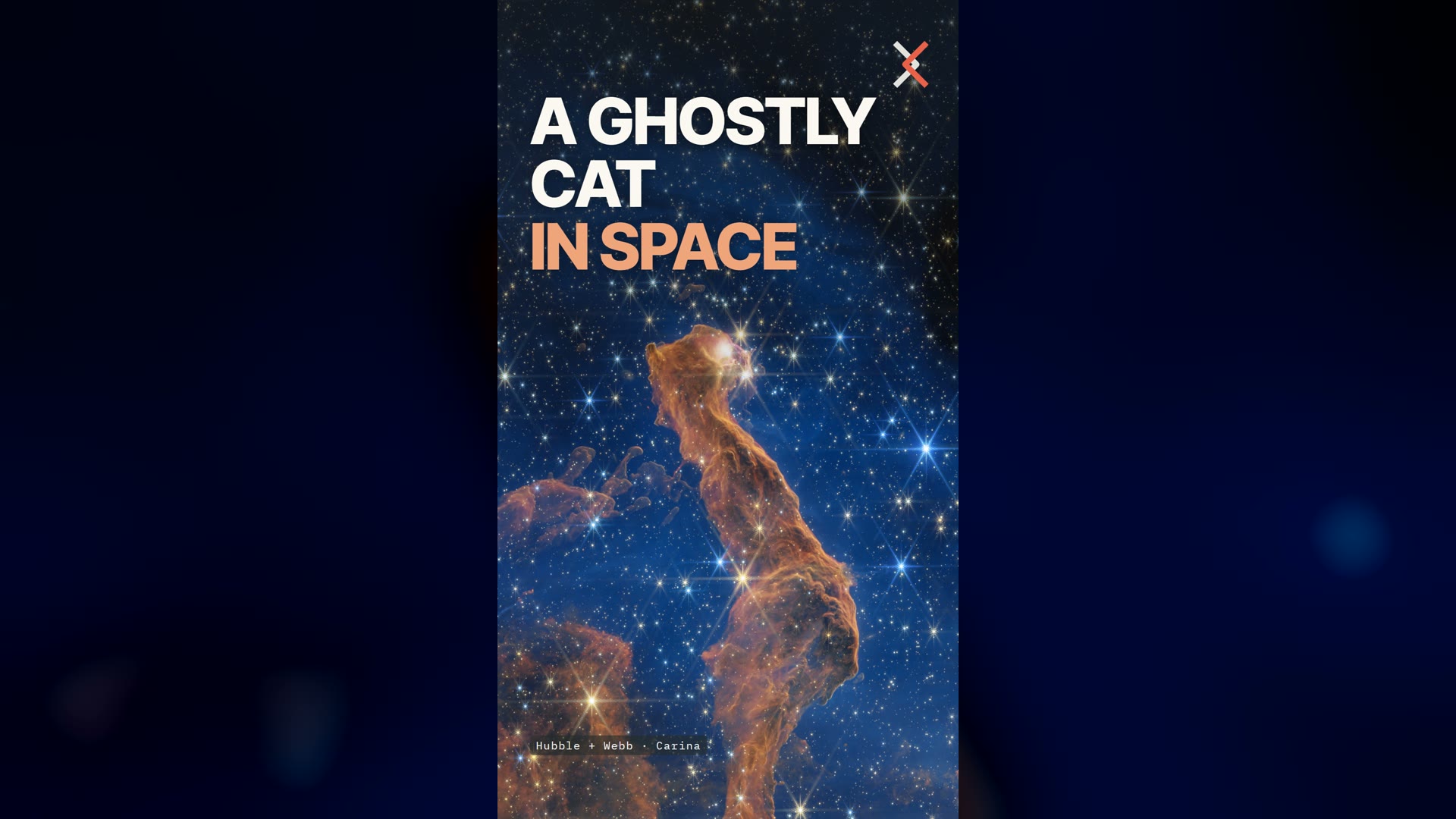
Just in time for Halloween, the Hubble and Webb space telescopes have imaged a cloud of gas and dust that looks like a ghostly cat. Astronomers call it the Cat's Head Nebula.
What happened
On 29 Oct 2026, ESA/Webb and ESA/Hubble released new images of the Cat's Head Nebula, titled "Ghostly Cat's Head Nebula lurks within sight of Hubble and Webb". NASA published its own image article the next day.[1][2][3][4]
The nebula is a massive gas and dust cloud about 7,500 light-years from Earth. It lies within the vast Carina Nebula, a diffuse star-forming region.[1][5]
The release includes a Hubble WFC3 image, a Webb NIRCam image and a Webb MIRI image, along with a side-by-side view of all three.[6]
Why it looks like a cat
The nebula is named for its resemblance to a cat sitting with its back toward the viewer. ESA/Hubble describes it as a dark, elongated dust pillar.[1][2]
The cat even seems to have a glowing red eye. According to the release, that eye may indicate a young star that is still partially embedded in dust.[1][2][5]
The cat is only a resemblance. The shape is a chance pattern in the dust, the kind of familiar form people tend to see in clouds.
How it works
The pillar was sculpted over time by intense ultraviolet radiation and winds from massive stars in the nearby Carina Nebula.[1][4]
According to NASA, the denser material in the cat-shaped pillar is resisting erosion, for now.[4][5]
Webb's near-infrared view, taken with its NIRCam instrument, peers through some of the dust to reveal a dense field of stars.[6][1]
Why it matters
Our readSeen together, the images show two sides of the same cloud. In Hubble's view the pillar is a dark shape. Webb's infrared view shows the stars that the dust partly hides. This is our reading of how the images complement each other.[1][6]
Our readThe pillar also shows how massive stars shape the clouds around them. Their light and winds wear the gas and dust away, and only the densest parts hold out.[1][4]
What's confirmed and what isn't
Confirmed by the space agencies: the nebula lies within the Carina Nebula, about 7,500 light-years away. It is a dust pillar sculpted by ultraviolet radiation and stellar winds, and Webb's near-infrared view reveals a dense field of stars behind some of the dust.[1][2][4][6]
Still hedged: the red eye "may" indicate a young star still partially embedded in dust. The sources do not say this for certain.[1][2]
The sources do not say how long the pillar will last. They give no star counts, ages or sizes for it here.
- Not claimedThat the red eye is definitely a young star; the sources say only that it may be one.
- Not claimedAnything about the cat shape beyond a resemblance.
- Not claimedAn outflow from a young star.
- Not claimedStar counts, ages or sizes.
- Not claimedHow long the pillar will last.
Sources
- ESA/Webb — Ghostly Cat's Head Nebula lurks within sight of Hubble and Webb (weic2622), 2026-10-29Primary
- ESA/Hubble — Ghostly Cat's Head Nebula lurks within sight of Hubble and Webb (heic2614), 2026-10-29Primary
- ESA — Ghostly Cat's Head Nebula lurks within sight of Hubble and WebbPrimary
- NASA — NASA's James Webb Space Telescope Captures Eerie Cat's Head, 2026-10-30Primary
- Phys.org — Ghostly Cat's Head Nebula lurks within sight of NASA's Hubble, WebbIndependent
- ESA/Webb — Cat's Head Nebula image pages (weic2622a–d)Primary
6 claims checked against these sources; 6 confirmed.
Spot an error? Request a correction.
Video transcript
Just in time for Halloween, Hubble and Webb have caught a ghostly cat in space.
It's the Cat's Head Nebula, in the Carina Nebula, about 7,500 light-years from Earth.
Its glowing red eye may be a young star, still partly hidden in dust.
Webb's infrared view sees through some of that dust, to a dense field of stars.
But there's no cat. It's a pillar of gas and dust, carved by ultraviolet light and winds from massive stars nearby.
Its denser dust is holding out, for now. A Halloween cat, sculpted by starlight.
Production note: The visuals are unaltered ESA/Webb images from Hubble WFC3, Webb NIRCam and Webb MIRI (CC BY 4.0), reframed with slow camera moves. No generated imagery is used, and the narration is a preset synthetic voice.
What else changed
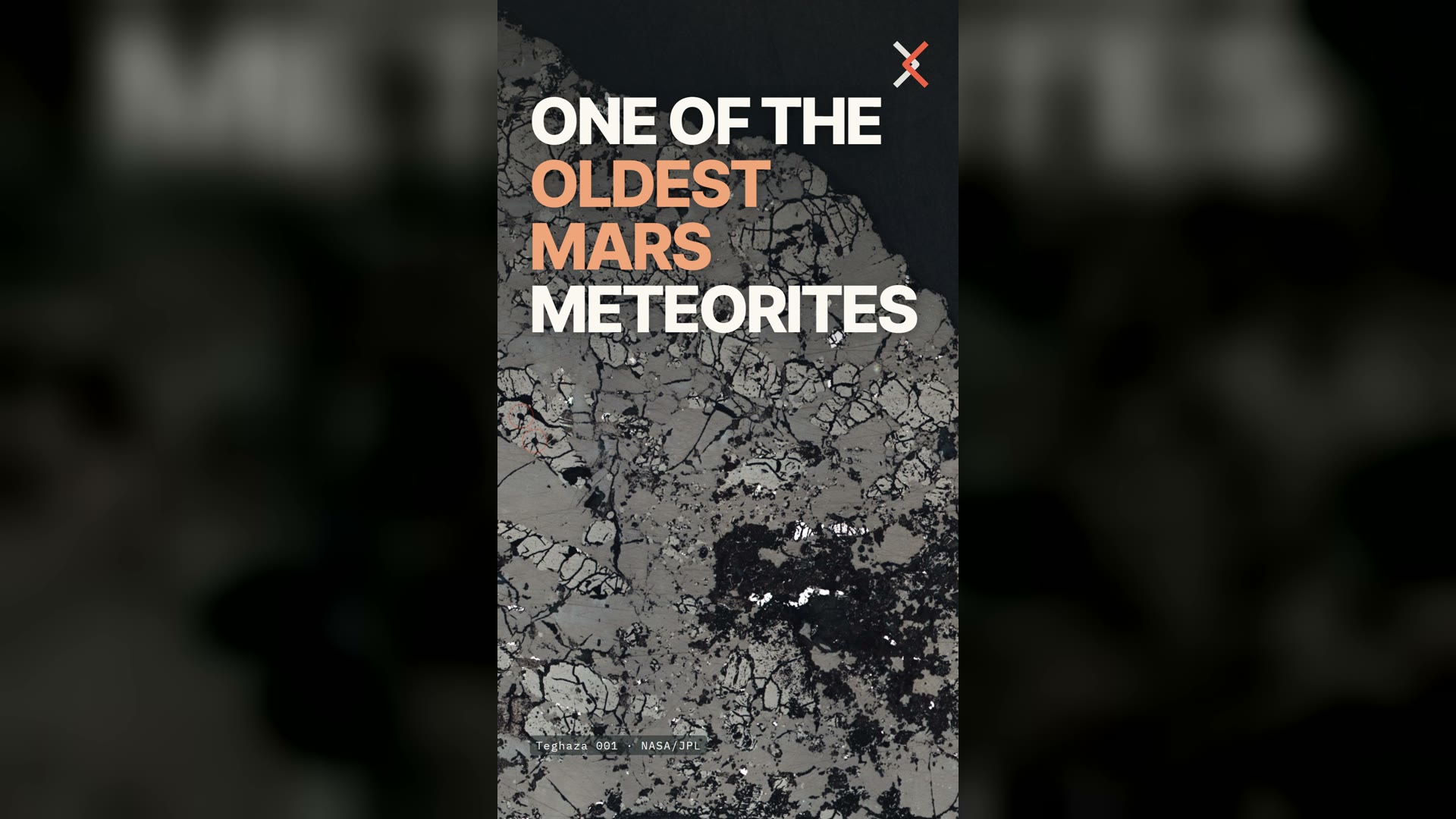 Space & Science2 min readSpace & ScienceOne of the Oldest Pieces of Mars Ever FoundA rose-colored stone found in the Sahara in 2022 turns out to be one of the oldest Martian meteorites ever found, and a rare sample of Mars' ancient crust.Read story
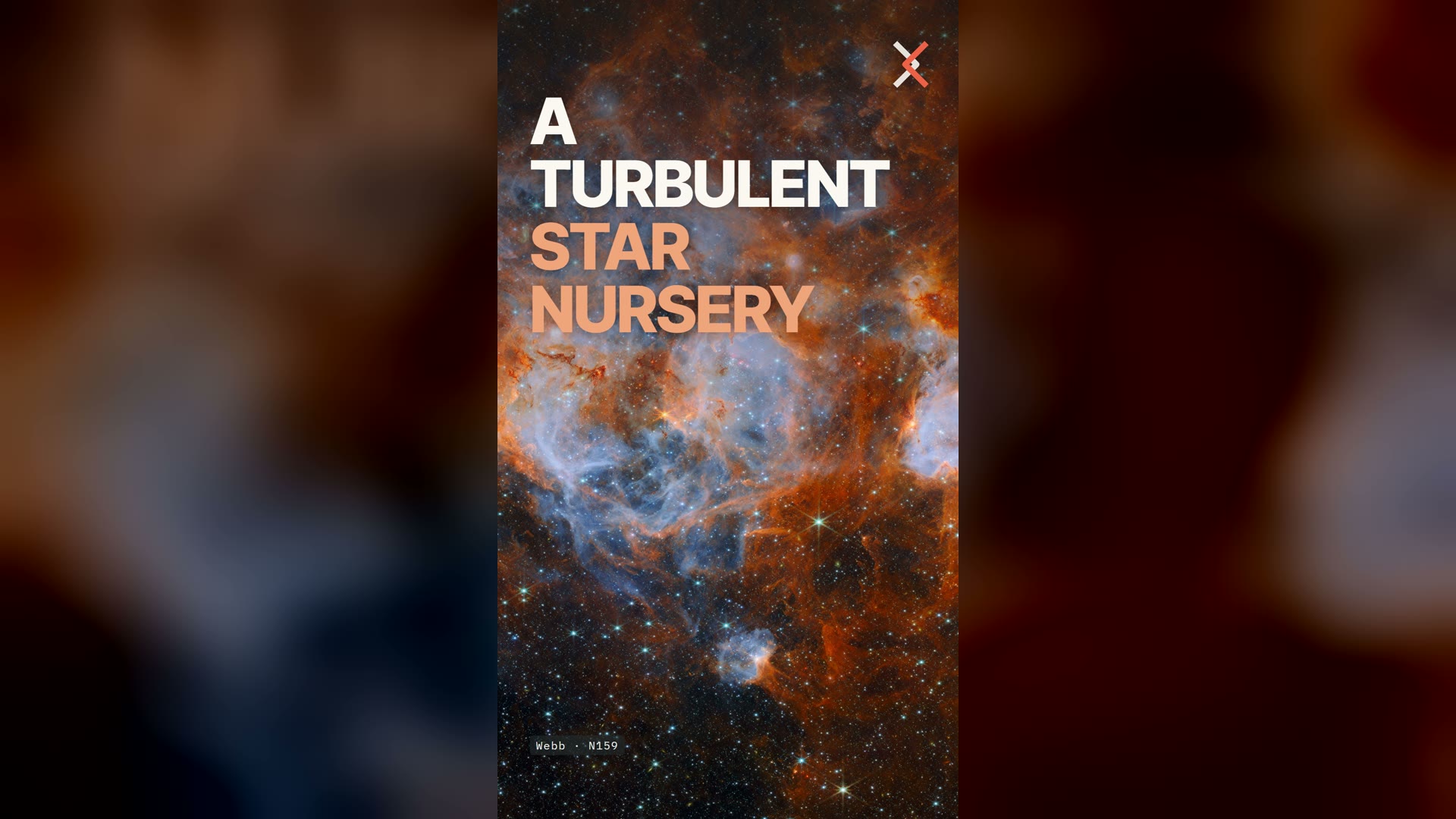 Space & Science2 min readSpace & ScienceWebb Sees a Turbulent Star NurseryA new James Webb Space Telescope image shows N159, a turbulent star nursery 161,000 light-years away whose conditions resemble those of the early universe.Read story
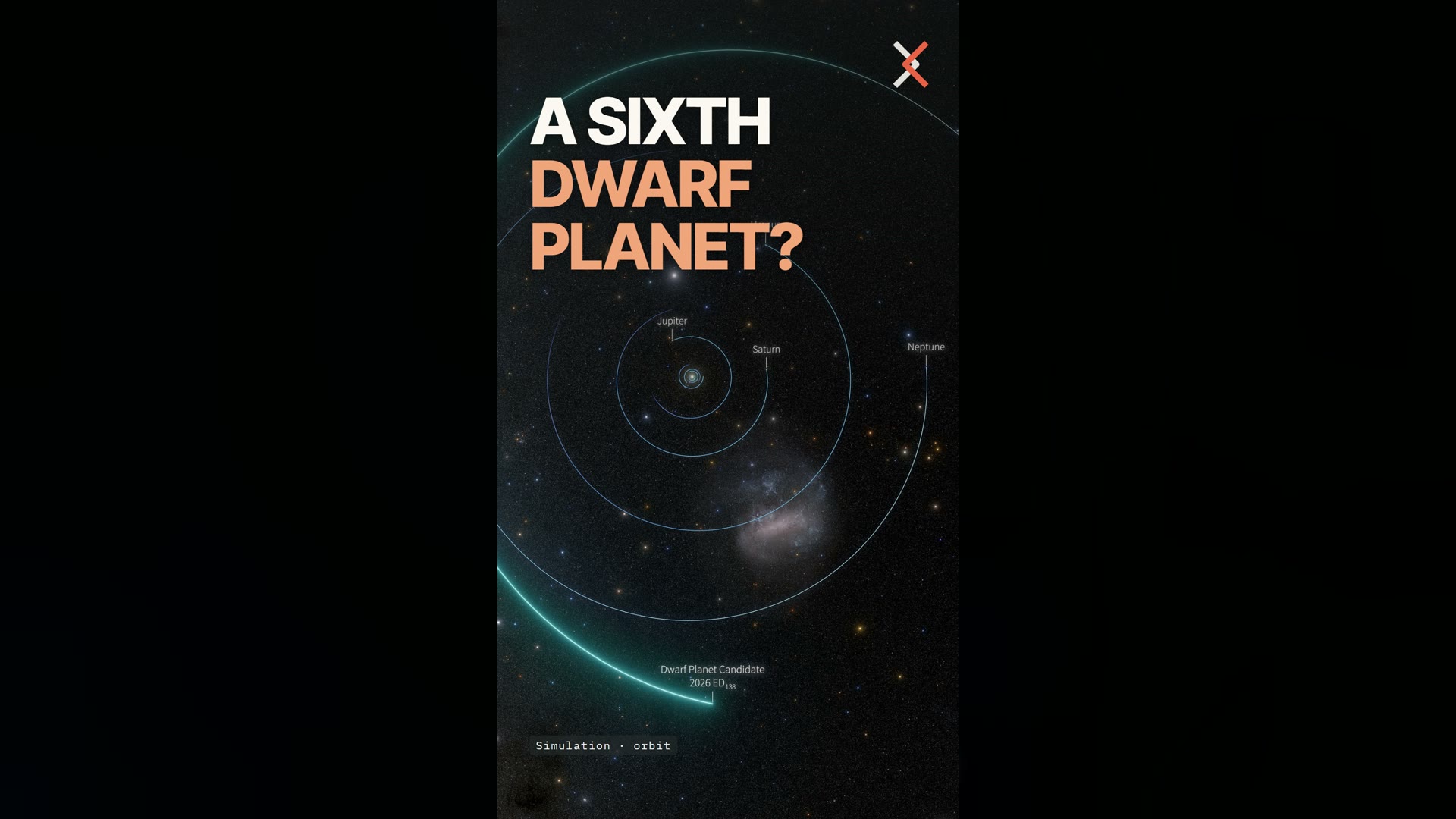 Space & Science2 min readSpace & ScienceRubin Spots Its First Possible Dwarf PlanetRubin Observatory has found a faint moving dot that could be a sixth recognized dwarf planet. Older images from 2016, taken by another telescope's camera, helped pin down its orbit.Read story