One of the Oldest Pieces of Mars Ever Found
A rose-colored stone found in the Sahara in 2022 turns out to be one of the oldest Martian meteorites ever found, and a rare sample of Mars' ancient crust.

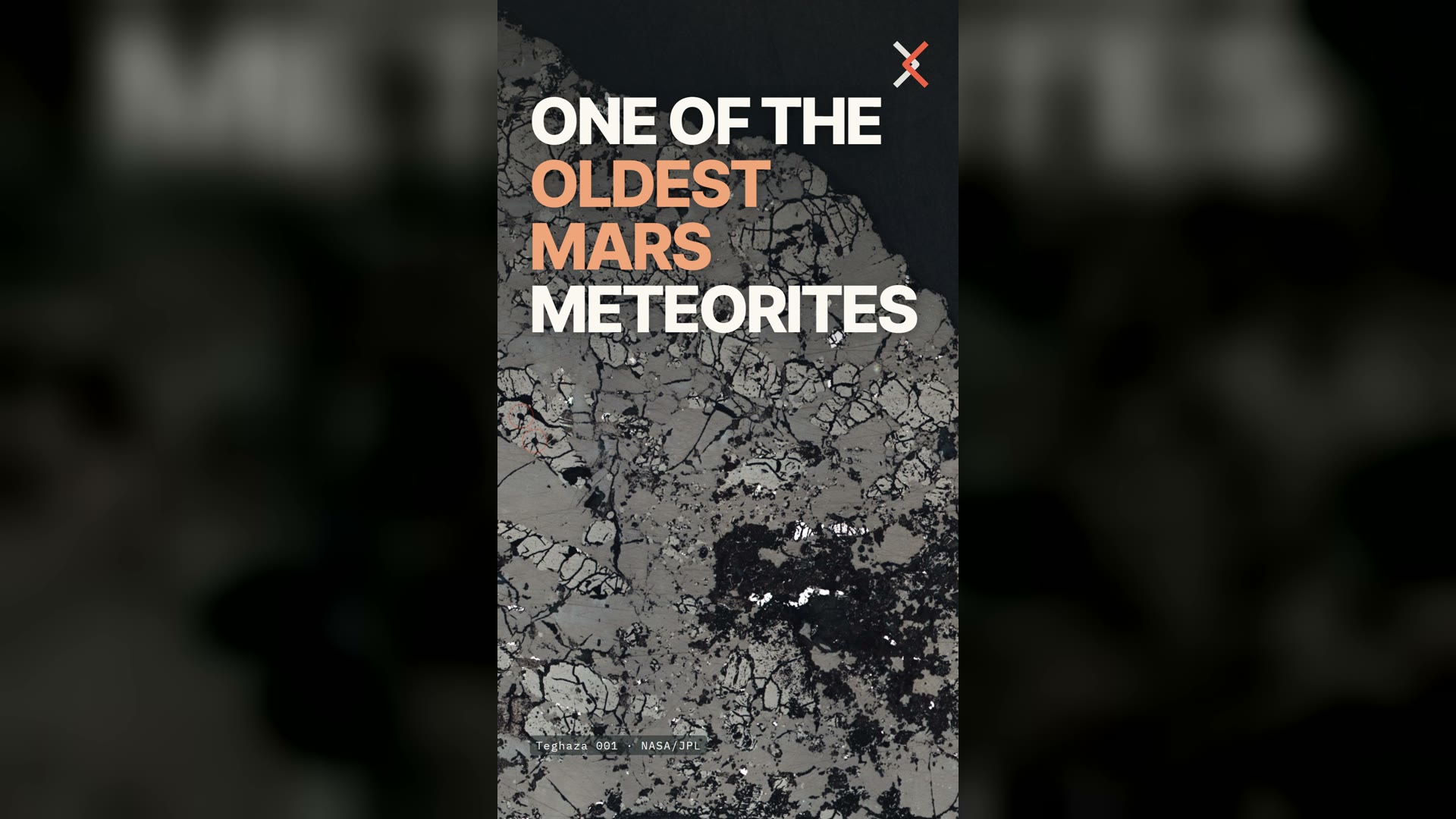
A meteorite found in the Sahara Desert has turned out to be one of the oldest pieces of Mars ever found on Earth. Scientists report that it formed at least 4.1 billion years ago.
What happened
When a rose-colored meteorite was found in the Sahara Desert in 2022, no one knew how old it was or where it came from. The rock, now named Teghaza 001, weighs nearly 2 pounds (800 grams).[1]
On 29 Oct 2026, a NASA-funded team led by Liu published a study of the rock in the journal Science. The paper's title says the meteorite formed ≳4.1 billion years ago and samples Mars' early crust and mantle. NASA's Jet Propulsion Laboratory described it as one of the oldest Martian meteorites ever found.[1][2]
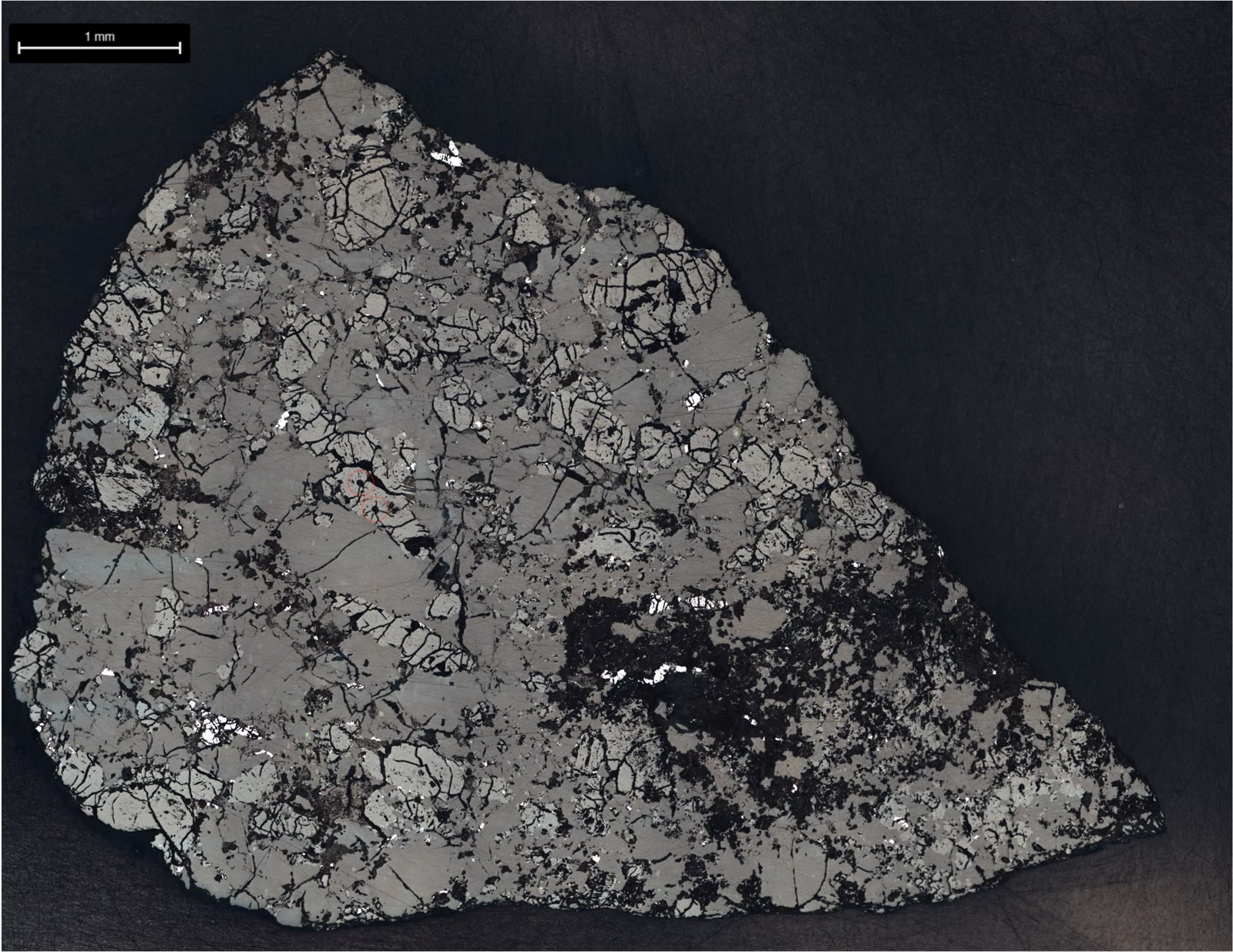
A thin slice of the meteorite, photographed in reflected light, was used to determine the age of the rock.[3]
Why it's surprising
The rock carries a record of water on early Mars. According to JPL, it was altered by Martian water sometime around 4.1 billion years ago, suggesting it originally formed even earlier. The paper's abstract describes aqueously altered minerals.[1][2]
Coauthor Saper called it "our first piece of Martian crust from a part of Mars we've never had a sample of before."[1]
How scientists dated it
Liu and her colleagues found zircon crystals in Teghaza 001. Geologists can use these crystals to precisely age-date a sample.[1]
Caltech coauthor Francois Tissot helped the researchers use a novel method pioneered by his team: in-situ rubidium-strontium age-dating. It used a piece of the meteorite smaller than a fingernail and analyzed single mineral grains on its surface. JPL notes that the technique preserves rare samples like Martian meteorites for future studies.[1]
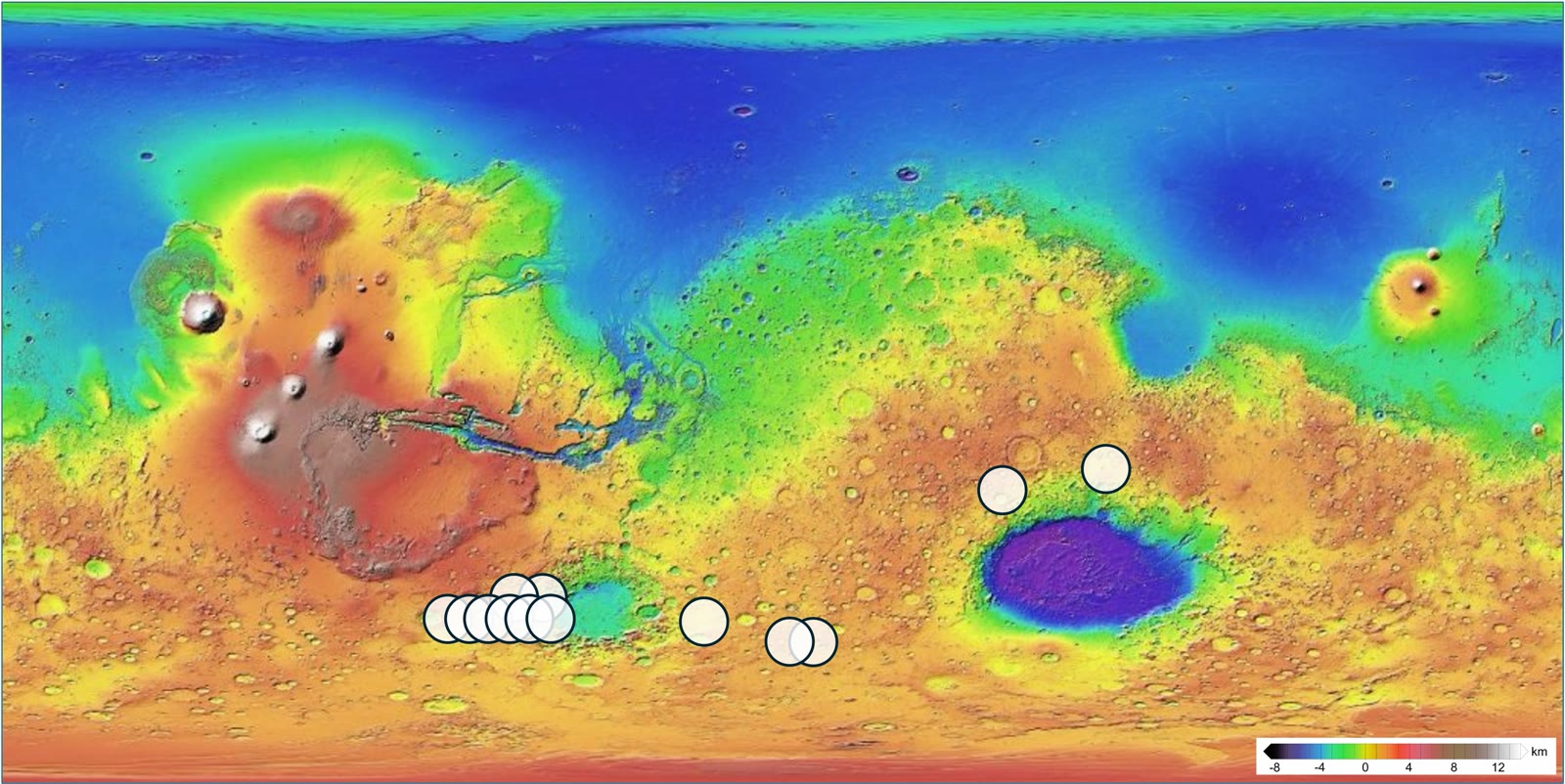
To look for its home, the team compared the rock with orbital data. Its distinctive mineralogy matches what NASA's Mars Reconnaissance Orbiter has observed in the planet's cratered southern highlands. Scientists identified 13 locations on Mars that match its mineralogy and chemistry.[1][4]
Why it matters
JPL says the meteorite provides a rare snapshot of Mars' ancient crust and formation. The paper's abstract states that it is a sample of ancient crust.[1][2]
Our readRead together, these findings mean that one small stone from the Sahara gives researchers direct access to a part of early Mars that had no sample before, including traces of how water changed the rock.[1][2]
What's confirmed and what isn't
Confirmed by JPL and the Science paper: Teghaza 001 formed at least 4.1 billion years ago, was altered by water, and is a sample of ancient Martian crust.[1][2]
Its exact origin is unknown. JPL states that no one will ever know exactly where the meteorite originated on Mars, although the paper identifies several potential locations.[1][4]
The rock is described as one of the oldest Martian meteorites, not the single oldest. Some outside coverage calls it the oldest known Mars rock; the primary source does not. Its age is a lower limit, not an exact figure. Details of the find and the dating method come from the JPL release, since the full paper text was not reviewed.[1][5]
- Not claimedThat Teghaza 001 is the single oldest Mars rock or meteorite.
- Not claimedAn exact age for the rock.
- Not claimedWhere on Mars it came from.
- Not claimedThat the zircon crystals alone dated it.
- Not claimedAnything about life on Mars.
- Not claimedThe findings of the separate Science Advances water paper mentioned on the JPL page.
Sources
- NASA JPL — NASA-funded Study Details One of Oldest Mars Meteorites Ever Found, 2026-10-29Primary
- Science — A Martian meteorite that formed ≳4.1 billion years ago samples Mars' early crust and mantle (Liu et al.), 2026-10-29Primary
- NASA Photojournal — PIA26801: Slice of Martian Meteorite Teghaza 001, 2026-10-29Primary
- NASA Photojournal — PIA26802: Map Showing Potential Origins of Martian Meteorite Teghaza 001, 2026-10-29Primary
- Scientific American — Oldest known Mars rock is a 'Rosetta stone' for the Red Planet's watery pastIndependent
7 claims checked against these sources; 7 confirmed.
Spot an error? Request a correction.
Video transcript
This slice of rock comes from one of the oldest pieces of Mars ever found on Earth.
It was found in the Sahara in 2022, about 800 grams of rock. At first, no one knew how old it was.
Zircon crystals inside it let scientists date the rock. Martian water changed it about 4.1 billion years ago, which suggests it formed even earlier.
A new method from a Caltech team dated single mineral grains on a piece smaller than a fingernail, which keeps the rare sample for future studies.
Its minerals match what NASA's Mars Reconnaissance Orbiter has seen in the planet's cratered southern highlands.
What it doesn't show is where on Mars it came from. The team found 13 matching places, but no one will ever know exactly where.
So one small stone from the Sahara becomes a rare sample of the ancient Martian crust.
Production note: The visuals are unaltered NASA/JPL-Caltech images: a slice of Teghaza 001 (PIA26801) and a map of its potential origins (PIA26802, NASA/JPL-Caltech/USGS), reframed with slow camera moves. No generated imagery was used, and the narration voice is a synthetic preset.
What else changed
 Space & Science2 min readSpace & ScienceHubble and Webb Spot a Ghostly Cat in SpaceNew Hubble and Webb images show the Cat's Head Nebula, a pillar of gas and dust in the Carina Nebula that looks like a cat seen from behind, with a glowing red eye.Read story
 Space & Science2 min readSpace & ScienceWebb Sees a Turbulent Star NurseryA new James Webb Space Telescope image shows N159, a turbulent star nursery 161,000 light-years away whose conditions resemble those of the early universe.Read story
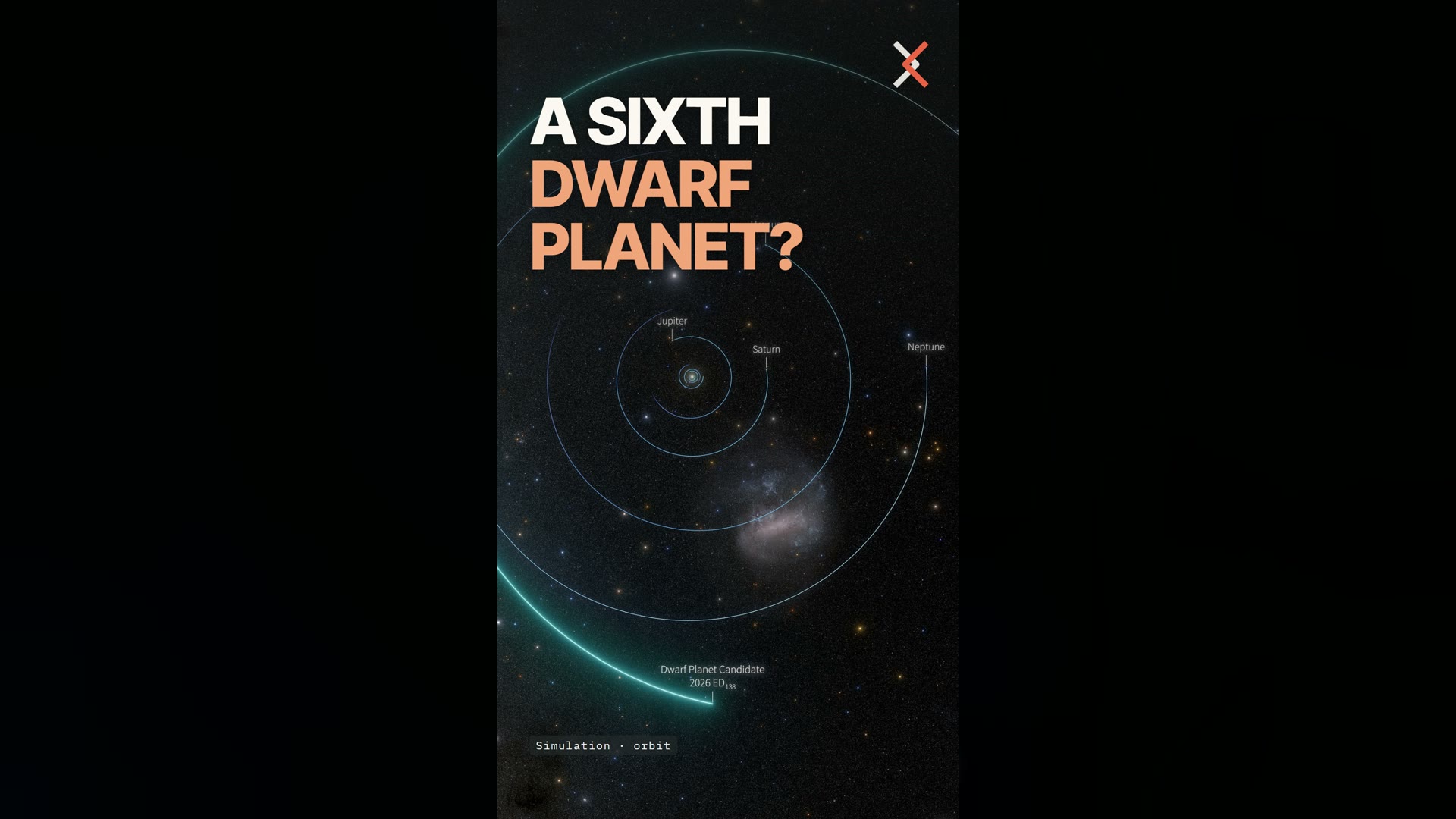 Space & Science2 min readSpace & ScienceRubin Spots Its First Possible Dwarf PlanetRubin Observatory has found a faint moving dot that could be a sixth recognized dwarf planet. Older images from 2016, taken by another telescope's camera, helped pin down its orbit.Read story