Webb Sees a Turbulent Star Nursery
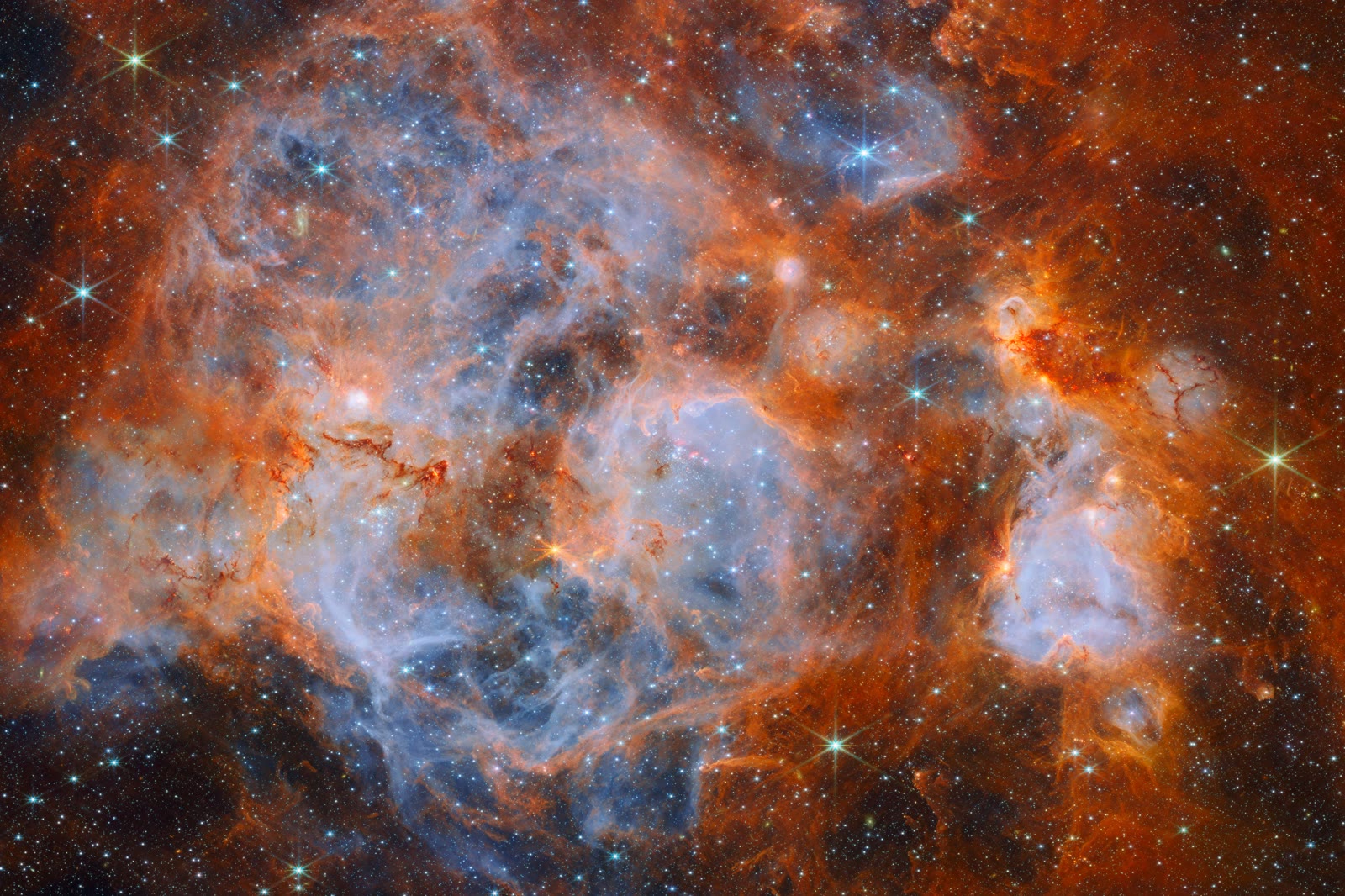
A new James Webb Space Telescope image shows N159, a turbulent star nursery 161,000 light-years away whose conditions resemble those of the early universe.

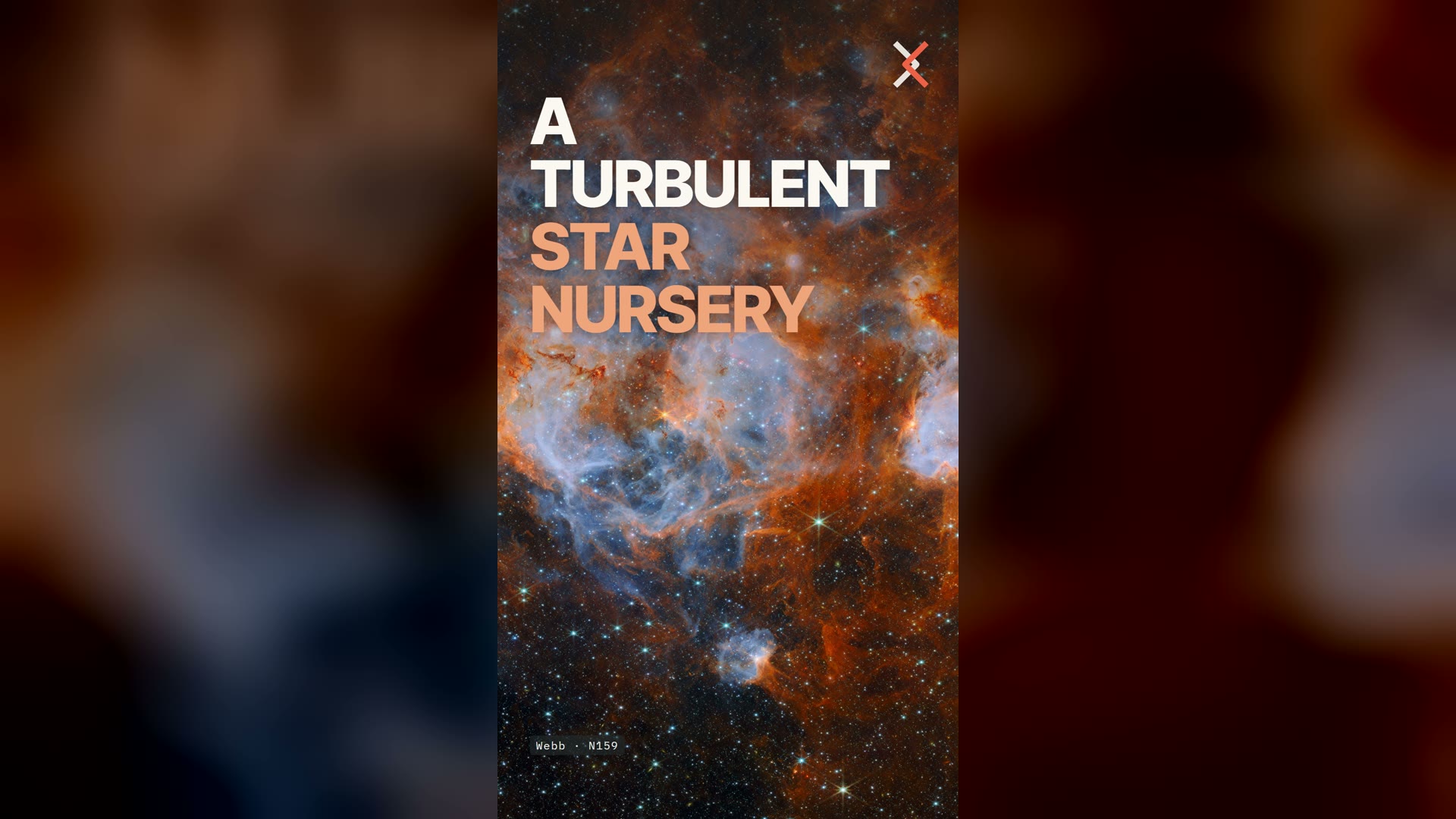
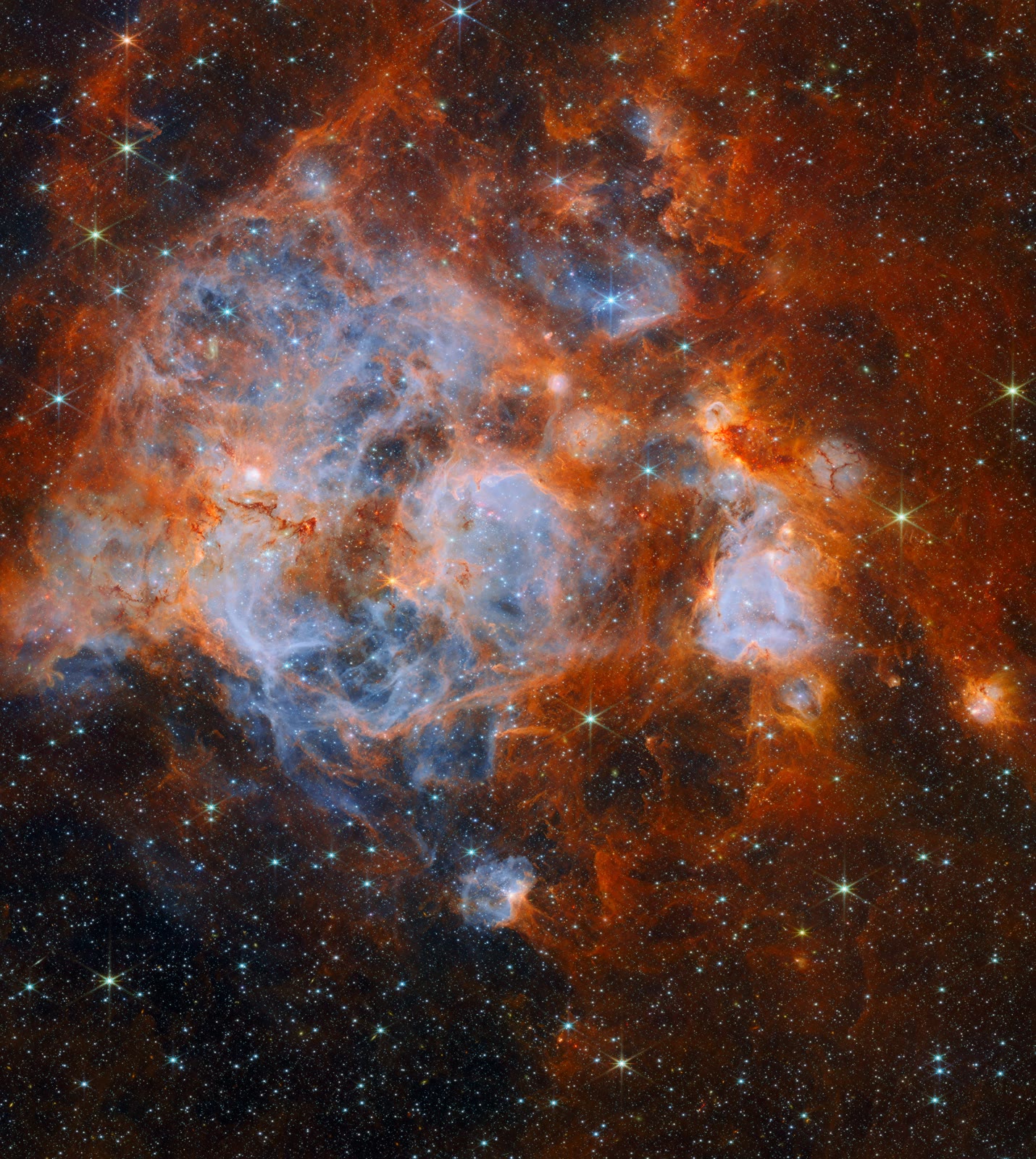
The James Webb Space Telescope has produced a new image of a turbulent cauldron of star formation, filled with dense clumps of gas.
What happened
ESA/Webb released the image as its Picture of the Month on 22 October 2026, under the title "Stars brewing in a nebulous cauldron". NASA published its own image article, "Webb Sees Turbulent Star Nursery", on 28 Oct 2026.[1][2]
The region is named N159. It lies 161,000 light-years away in the Large Magellanic Cloud, one of the satellite galaxies orbiting the Milky Way. According to NASA, the whole scene is a turbulent cauldron of star formation filled with dense clumps of gas.[1][2]
Space.com also featured the image as a space photo of the day.[3]
Why a nearby nursery is useful
N159 sits in a neighbouring galaxy, not in the distant universe. Yet both agencies point to it as a way to learn about conditions in the early universe.[1][2]
Our readThat is the less obvious part of the story. A region close to us, in cosmic terms, can stand in for conditions that existed long ago, without showing those ancient times directly.[1][2]
How it works
The key is metallicity. Astronomers use the word for the proportion of elements heavier than hydrogen and helium. NASA reports that N159 has a lower metallicity than the Milky Way. ESA/Webb notes that the Large Magellanic Cloud as a whole has lower metallicity.[1][2]
ESA/Webb says this lets researchers study H II regions in conditions that are more similar to those found in the early Universe. NASA says it gives astronomers an opportunity to learn more about conditions in the early universe and how stars formed under those conditions.[1][2]
Why it matters
Our readStar formation in the early universe cannot be watched up close. A nearby nursery with similar chemistry gives astronomers a place to study that kind of star formation in detail. In that sense, a turbulent region next door becomes a way to study how stars formed long ago.[1]
What's confirmed and what isn't
Confirmed by NASA and ESA/Webb: the new Webb image of N159, its location 161,000 light-years away in the Large Magellanic Cloud, the dense clumps of gas, and its lower metallicity compared with the Milky Way.[1][2]
This is an image release, not a new scientific result. The image does not show the early universe itself. It shows a nearby region whose conditions are closer to that time. This report makes no claims about the first stars or about the region's age, size or number of stars.[1][2]
- Not claimedThat the image shows the early universe.
- Not claimedAnything about the first stars.
- Not claimedThe region's age, size or star counts.
- Not claimedAnything about the Papillon Nebula.
- Not claimedAny new scientific discovery beyond the image release.
Sources
- NASA — Webb Sees Turbulent Star Nursery, 2026-10-28Primary
- ESA/Webb — Stars brewing in a nebulous cauldron, 2026-10-22Primary
- Space.com — Glowing 'cauldron' of new stars | Space photo of the day for Oct. 26, 2026Independent
7 claims checked against these sources; 7 confirmed.
Spot an error? Request a correction.
Video transcript
This is a new image from the Webb telescope: a turbulent cauldron where stars are forming.
Up close, the whole region is filled with dense clumps of gas.
Its name is N159, and it sits 161,000 light-years away, in the Large Magellanic Cloud, one of the satellite galaxies orbiting our Milky Way.
Here's what makes it useful. This region has a lower metallicity than the Milky Way: a smaller share of elements heavier than hydrogen and helium.
That gives astronomers a chance to learn about conditions in the early universe, and how stars formed under them.
What this image doesn't show is the early universe itself. It's a nearby region with conditions closer to that time.
So a turbulent nursery next door becomes a way to study how stars formed long ago.
Production note: The visuals are unaltered CC BY 4.0 ESA/Webb images and videos of N159 that were only resized, cropped, trimmed or sped up. No generated imagery was used, and the narration uses a preset synthetic voice.
What else changed
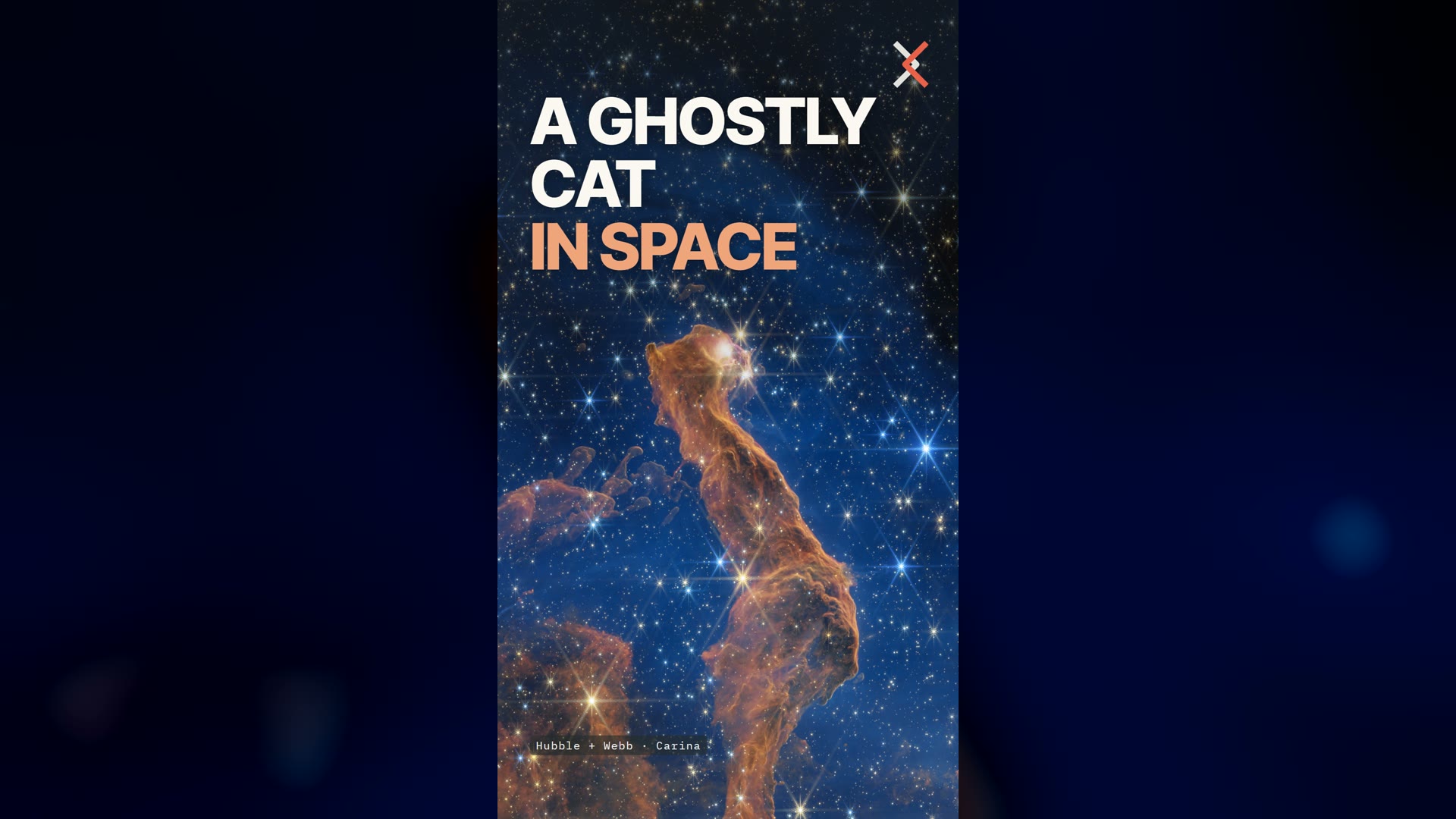 Space & Science2 min readSpace & ScienceHubble and Webb Spot a Ghostly Cat in SpaceNew Hubble and Webb images show the Cat's Head Nebula, a pillar of gas and dust in the Carina Nebula that looks like a cat seen from behind, with a glowing red eye.Read story
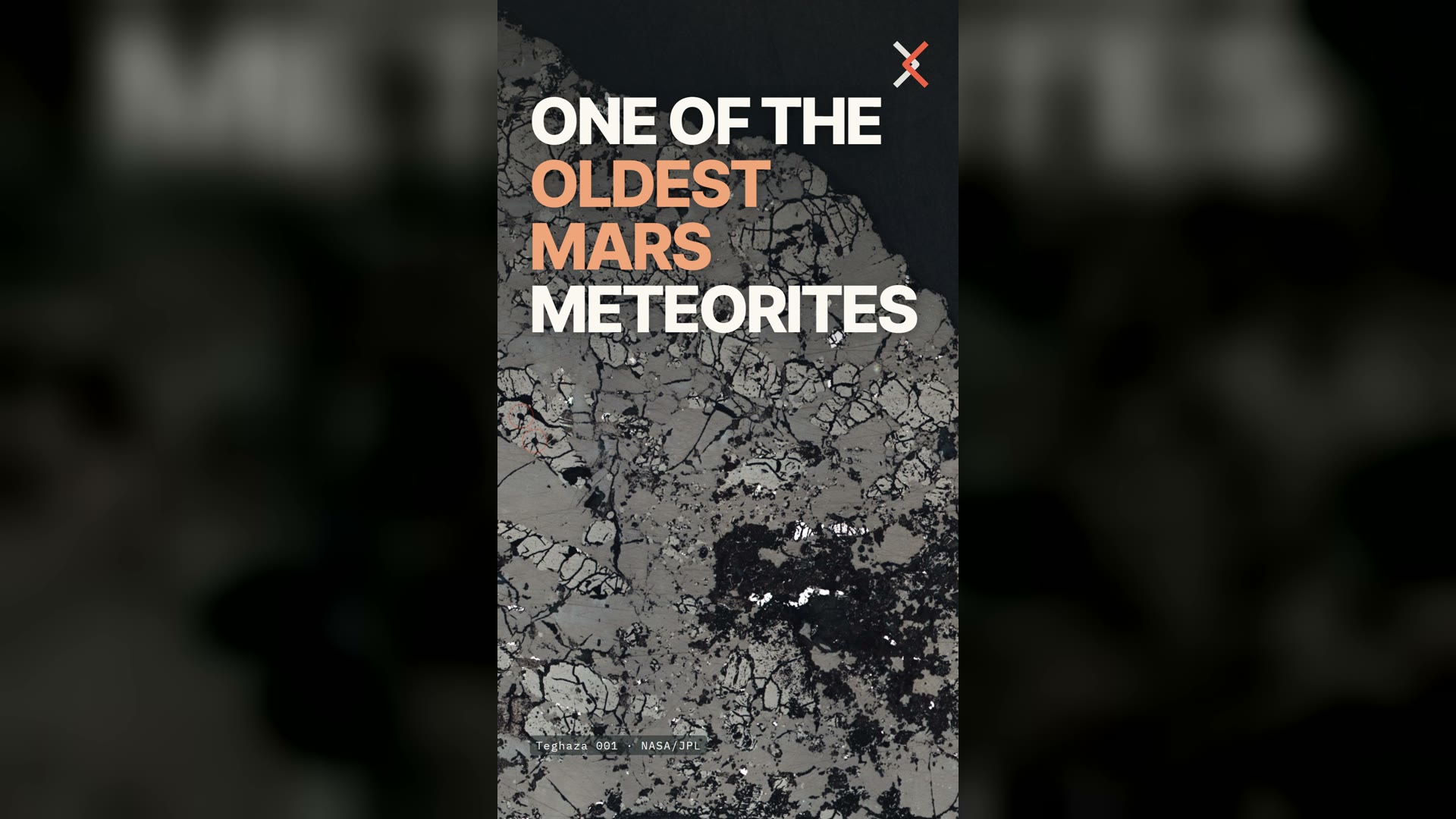 Space & Science2 min readSpace & ScienceOne of the Oldest Pieces of Mars Ever FoundA rose-colored stone found in the Sahara in 2022 turns out to be one of the oldest Martian meteorites ever found, and a rare sample of Mars' ancient crust.Read story
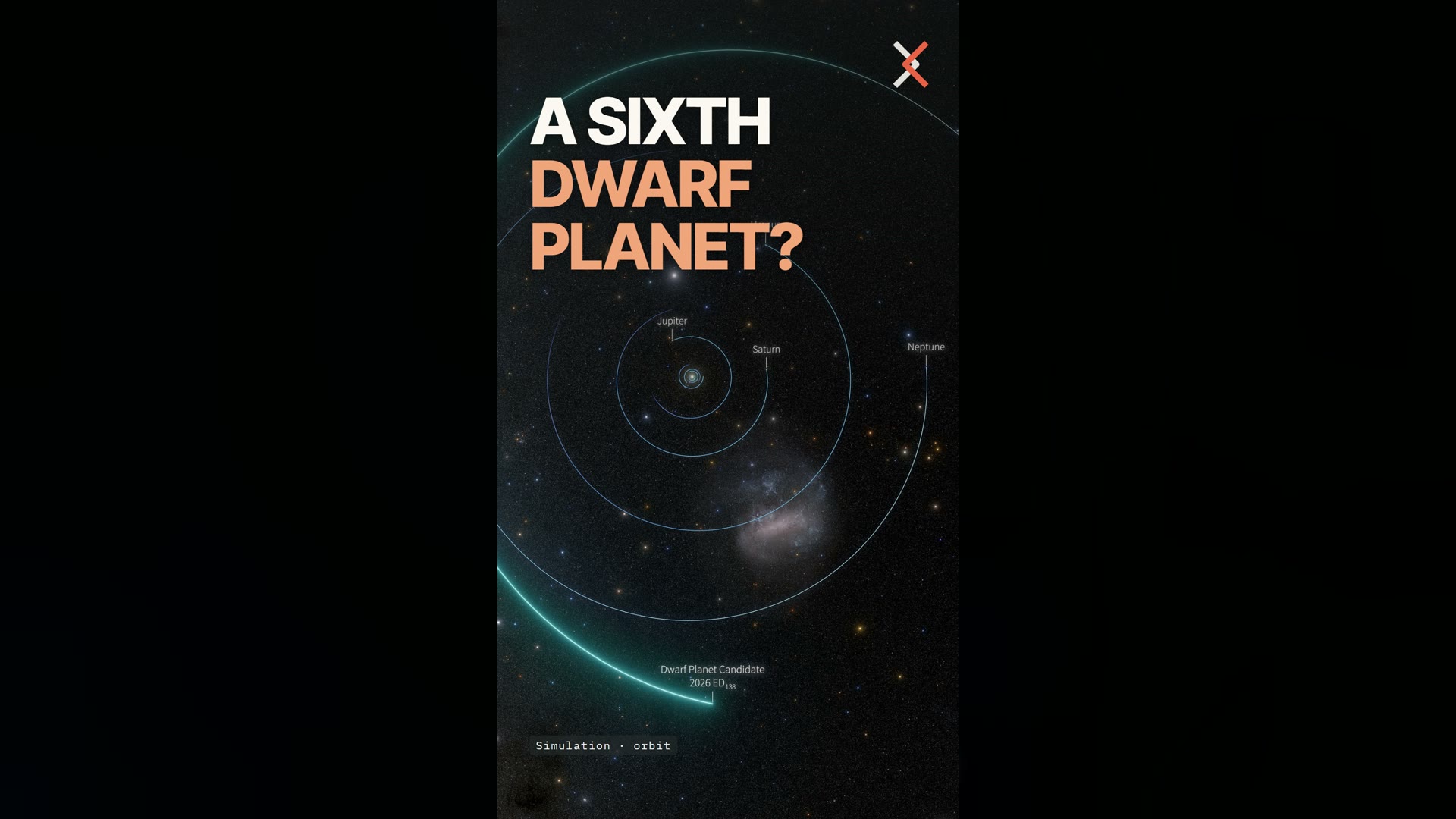 Space & Science2 min readSpace & ScienceRubin Spots Its First Possible Dwarf PlanetRubin Observatory has found a faint moving dot that could be a sixth recognized dwarf planet. Older images from 2016, taken by another telescope's camera, helped pin down its orbit.Read story